
Dear event organizers,
Please tell us what it will actually be like to attend. Your invitation may explain the subject beautifully and introduce every speaker. Yet a person deciding whether to come may still be unable to picture the route from the street to a seat, the length of the session, or what happens if they need to step outside.
This is a request for useful information before booking. Enthusiasm cannot answer a practical question. When the details are available early, people can make their own decisions without turning every uncertainty into a private conversation.
Describe the journey beyond the address
A street address identifies the building. It does not necessarily identify the entrance guests will use. Tell people which door opens for the event, whether there are steps, and what route connects that entrance to the room. If the route depends on a lift, explain where it is and how to reach it.
Be specific where you can. “The meeting room is on the second floor, reached by the lift beside reception” gives someone a starting point. “Easy access” leaves them guessing. If you have not confirmed an important detail with the venue, say that it is being checked and update the invitation when you know.
Do not assume every attendee will arrive by car or approach from the same direction. A brief description of the entrance from nearby public transport, the drop-off point, or the building courtyard can prevent the final part of the journey becoming an avoidable puzzle.
Let us picture the room
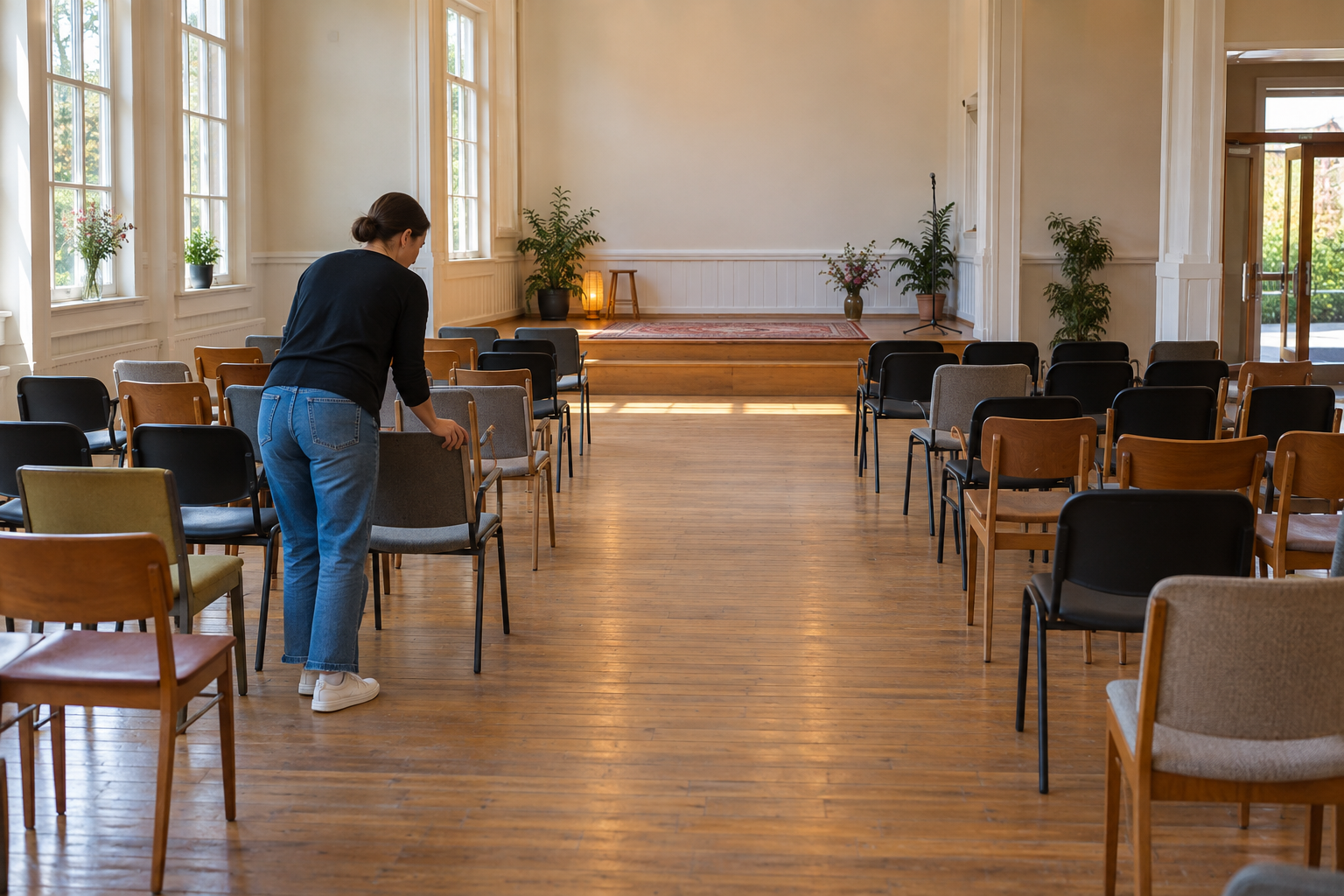
Explain whether the event is seated, standing, or a mixture. Mention the seating arrangement and whether people can choose a place near an exit. If there are reserved spaces or a process for requesting seating, describe that process without asking people to tell their medical histories on a public form.
Sound and communication deserve the same care. State what has actually been arranged: microphones, captions, an interpreter, or a hearing loop that has been checked. An invitation should distinguish confirmed provision from something available only by prior arrangement. The difference can determine whether participation is possible.
Include information about toilets, breaks, and any quieter space. These details need not become a grand claim that the venue suits everyone. A plain description gives people something they can evaluate against their own needs.
Publish the shape of the evening
A start time alone is an incomplete plan. Tell us when doors open, when the main session begins, whether there is an interval, and when the organized activity is expected to finish. Someone coordinating care, transport, medication, or work may need the end time as much as the beginning.
Explain participation too. Does a workshop involve speaking to strangers, moving between tables, or bringing equipment? Can someone observe without taking part in every exercise? Is the networking portion optional? Making these choices visible helps people arrive prepared rather than discovering an unexpected obligation in the room.
Where timings are approximate, label them honestly. You do not need to promise that a discussion will end to the second. You can still tell people whether they are committing to forty minutes or an entire afternoon.
Make the practical costs visible
Please place essential charges where the invitation describes the event. If the ticket covers entry but refreshments cost extra, say so. If booking is required for a free event, explain it. If a companion needs a separate booking, make that arrangement easy to find.
The same applies to equipment and preparation. A materials list sent only after payment can change the real cost of attending. A request to download an app can matter to someone without a suitable phone. Giving advance notice allows a reasonable decision before money or travel is committed.
Give unanswered questions a real destination
No event page can anticipate every situation. Offer a contact route that someone monitors, and say when a reply can reasonably be expected. Ask what would help a person participate. Let them describe a practical need without requiring them to justify wanting to attend.
A short invitation can still do this well. Put essential details together under a clear heading, use ordinary language, and keep the information updated when the venue or timetable changes. If information is supplied in an image, provide the same details as readable text.
You already spend time choosing a room, arranging chairs, and planning the running order. Sharing the relevant parts of that work is part of welcoming the audience. It lets the invitation become a usable plan.
Please help us imagine the visit before asking us to commit to it.