
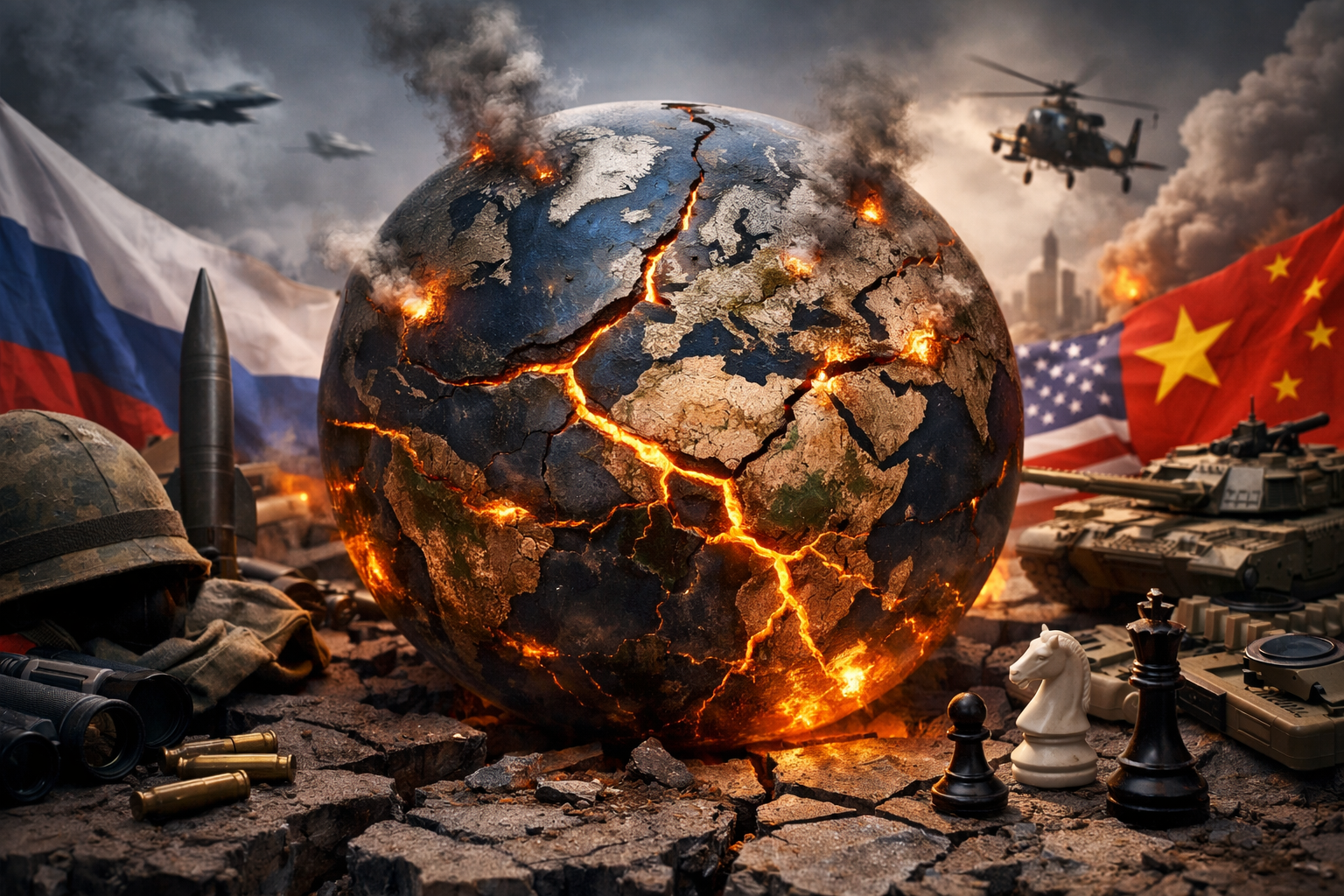
The New Geography of Global Tension
News and current affairs are increasingly dominated by conflicts that stretch far beyond the battlefield. Modern geopolitics is no longer defined only by formal wars between states; it now includes proxy struggles, cyberattacks, economic coercion, information campaigns, and competition over energy, technology, and strategic infrastructure. As a result, conflicts in one region can quickly affect food prices in another, influence elections elsewhere, or disrupt shipping lanes that support the global economy.
In recent years, the international system has appeared more fragmented and less predictable. Longstanding assumptions about stability, deterrence, and diplomatic norms have been tested by renewed territorial disputes, great-power rivalry, and growing mistrust between regional blocs. For policymakers, journalists, and ordinary citizens alike, conflicts and geopolitics have become deeply interconnected with everyday life.
Why Local Conflicts Now Have Global Consequences
One of the defining features of current affairs is the speed at which local crises become global concerns. A conflict that begins as a border dispute or domestic insurgency can trigger refugee flows, commodity shortages, sanctions regimes, and military posturing by external powers. This is especially true in regions that are critical to energy exports, maritime trade, or access to rare minerals and technology supply chains.
For example, instability near major shipping chokepoints can raise transportation costs and delay goods worldwide. Armed conflict in key grain-producing areas can increase food insecurity in import-dependent countries. Likewise, crises in energy-producing regions often cause volatility in oil and gas markets, forcing governments to rethink strategic reserves, defense commitments, and foreign partnerships.
- Conflicts affect global energy prices and supply security.
- War and sanctions can disrupt food production and trade routes.
- Cyber conflict can target financial systems, media, and public infrastructure.
- Refugee movements can reshape domestic politics in neighboring states.
- Strategic rivalries influence military spending and alliance-building.
The Return of Great-Power Competition
A major trend in conflicts and geopolitics is the return of great-power competition. While the post-Cold War era was often described in terms of globalization and liberal integration, current affairs suggest a harder-edged reality. Major powers are now competing more openly over spheres of influence, military positioning, access to technology, and control over narratives.
This competition is visible in Europe, the Indo-Pacific, the Middle East, and parts of Africa and Latin America. It does not always take the form of direct confrontation. More often, states project influence through arms sales, infrastructure financing, diplomatic pressure, sanctions, intelligence activity, and support for local partners. This creates a layered geopolitical environment in which regional conflicts are often amplified by external strategic interests.
The consequences are significant. Smaller and middle powers are increasingly pressured to balance between competing blocs rather than align fully with one side. Many are pursuing more flexible foreign policies, seeking economic ties with one power while relying on security guarantees from another. This balancing act reflects a broader shift toward a more multipolar, but also more unstable, international order.
Technology as a Battlefield
Modern conflict extends into domains that were once considered secondary. Cyberwarfare, satellite disruption, artificial intelligence, and surveillance systems now play a central role in both security planning and geopolitical competition. States are investing heavily in technologies that can gather intelligence, shape public opinion, defend networks, and weaken adversaries without crossing the threshold into open war.
This has blurred the line between war and peace. A country may face sustained cyberattacks, disinformation campaigns, election interference, or attacks on undersea cables without a formal declaration of war. These tools allow states and non-state actors to inflict strategic damage while maintaining plausible deniability.
The geopolitical struggle over semiconductors, telecommunications infrastructure, and critical digital platforms also demonstrates how technology has become inseparable from national security. Control over advanced manufacturing and data systems is now treated as a strategic asset, much like oil fields or naval bases once were.
Regional Flashpoints That Shape the World
Certain regions remain central to current affairs because they combine historical grievances, military competition, and international involvement. Eastern Europe remains a focal point for questions of sovereignty, deterrence, alliance credibility, and the future of European security. In the Indo-Pacific, maritime disputes, Taiwan-related tensions, and naval expansion reflect broader concerns about regional order and freedom of navigation.
The Middle East continues to influence global politics through energy markets, proxy networks, sectarian tensions, and strategic waterways. Meanwhile, conflicts in Africa, whether linked to insurgency, resource competition, or fragile governance, increasingly draw international attention because of their humanitarian impact and implications for migration and foreign military involvement.
What connects these flashpoints is not only violence, but also their symbolic and strategic importance. They test whether international law can restrain force, whether diplomacy can outpace escalation, and whether global institutions retain enough legitimacy to mediate crises effectively.
The Role of International Institutions
International organizations remain important, but their limitations are increasingly visible. The United Nations, regional bodies, and multilateral forums can provide negotiation channels, humanitarian coordination, and legal frameworks. However, they often struggle when major powers are divided or when parties to a conflict see more advantage in escalation than compromise.
Even so, diplomacy still matters. Ceasefire talks, backchannel negotiations, prisoner exchanges, sanctions relief discussions, and humanitarian corridors may not resolve core disputes immediately, but they can reduce civilian suffering and prevent wider regional war. In many cases, diplomacy works incrementally rather than dramatically.
What to Watch in the Future
The future of conflicts and geopolitics will likely be shaped by several overlapping pressures: competition between major powers, climate-related instability, arms modernization, demographic stress, and the securitization of trade and technology. Governments are increasingly treating economic interdependence not as a guarantee of peace, but as a source of vulnerability.
For news audiences, this means current affairs coverage must be read with a wider lens. A military clash is rarely just a military story. It is also a story about supply chains, media narratives, alliance structures, domestic politics, and the struggle to define global rules. The most important geopolitical question today is not simply where the next conflict will emerge, but how interconnected systems will respond when it does.
In that sense, understanding modern conflicts requires more than tracking front lines. It requires recognizing that geopolitics now operates across economic, digital, environmental, and ideological dimensions all at once. The world is not only witnessing conflict; it is living through a broader contest over power, order, and the future shape of international relations.