
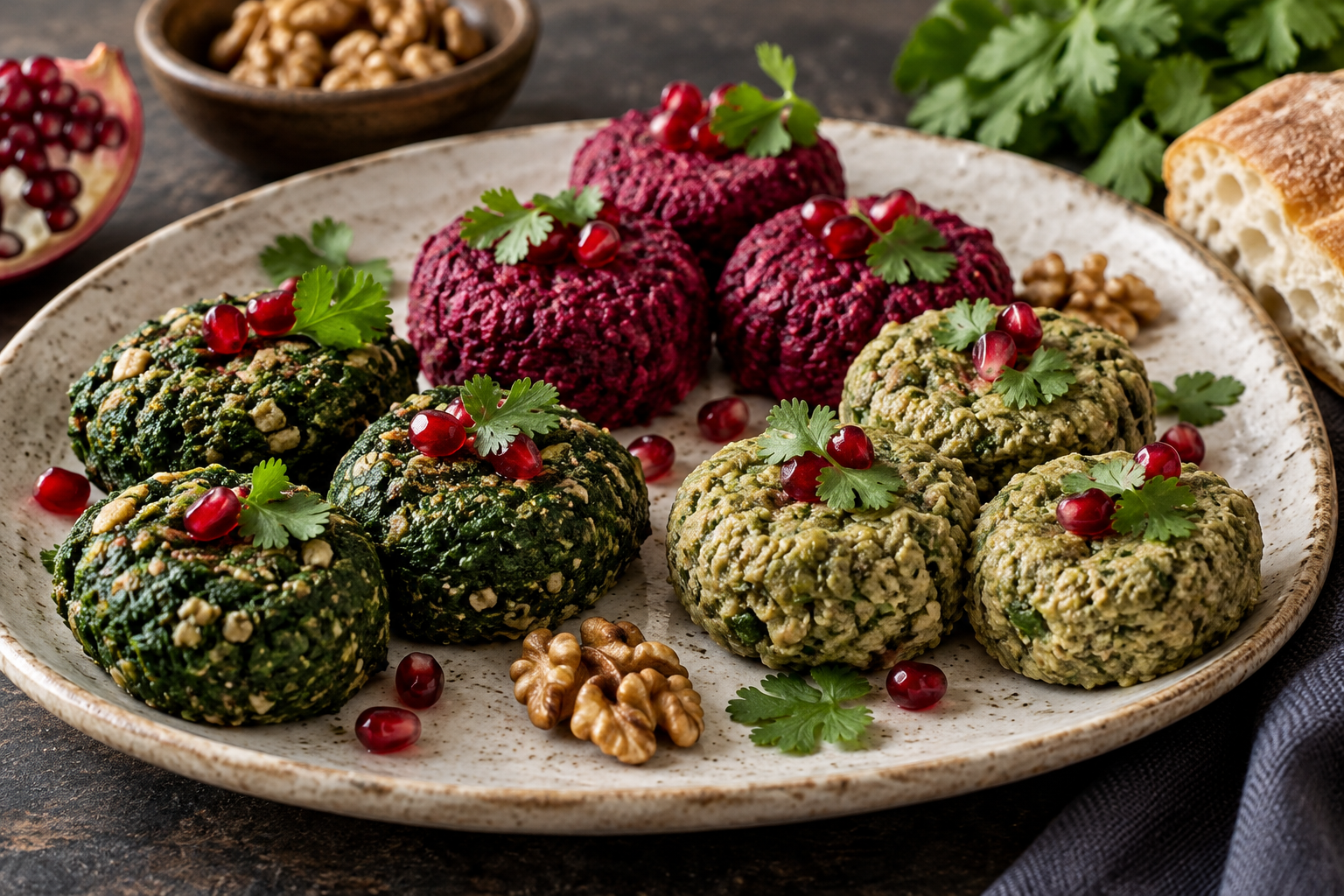
A platter of pkhali can look elaborate while relying on one straightforward idea: combine finely chopped vegetables with seasoned walnuts, then let each vegetable remain recognizable. Spinach gives you a deep green mixture, beetroot brings sweetness and color, and green beans offer a gentler flavor alongside both.
Pkhali belongs to a varied Georgian cooking tradition. Ingredients and presentation differ between households and regions; some versions are loose mixtures rather than neat patties. This small home adaptation uses three accessible vegetables and a shared walnut base. It is a starting point for an appetizer platter, not a claim that every Georgian kitchen follows the same recipe.
Gather the ingredients
The vegetable weights below are measured after cooking, cooling, and draining. Starting with equal prepared weights makes the three bowls easier to season. You will also need a knife, chopping board, three mixing bowls, and either a food processor or a mortar.
- 150 grams cooked spinach, squeezed to remove excess water
- 150 grams cooked beetroot, peeled and patted dry
- 150 grams cooked green beans, trimmed and thoroughly drained
- 150 grams shelled walnuts
- 1 small garlic clove, finely grated
- 3 tablespoons finely chopped fresh cilantro
- 1 teaspoon ground coriander
- Up to 2 tablespoons wine vinegar, added gradually
- Salt to taste, plus optional pomegranate seeds for serving
Choose plain cooked beetroot rather than beetroot already sitting in sweetened vinegar. Frozen spinach can work if it is cooked according to its package instructions and drained well. Keep a little extra chopped walnut available in case one vegetable mixture needs more body.
Prepare each vegetable separately
For spinach, let the cooked leaves become cool enough to handle safely, then squeeze small handfuls over a bowl. Chop them across several directions so long strands do not pull a patty apart. The result should feel moist but should not release a puddle when pressed.
Cook the green beans until tender rather than leaving them crunchy. Drain, allow steam to escape briefly, and chop finely. Press them gently in a sieve if they still carry surface water. Remove any tough strings instead of trying to hide them with extra processing.
Cook the beetroot until a knife passes through comfortably, then peel once safe to handle. Chop it finely or grate it coarsely and chop through the shreds. Pat away excess liquid. Work with the beetroot last, or clean the board between vegetables, to keep the other colors distinct.
Make a walnut base with some texture
Pulse the walnuts in short bursts until finely ground, stopping before they become an oily nut butter. With a mortar, work in small batches. Rub a pinch between your fingers: tiny soft particles are useful; large hard chunks make shaping awkward.
Mix in the garlic, cilantro, and ground coriander. Divide this dry base equally among the three bowls. Add one prepared vegetable to each bowl, followed by a small pinch of salt and a teaspoon of vinegar. Mix thoroughly with a spoon before deciding whether anything else is needed.
A single shared base saves effort, but identical seasoning is not the goal. Beetroot may welcome more acidity, while a mild green bean mixture can be overwhelmed by it. Taste each bowl separately and add the remaining vinegar in small increments. The full two tablespoons may not be necessary.
Adjust before you shape
Press a spoonful gently against the side of its bowl. If it holds together without slumping, it is ready. A wet mixture may need more careful draining or a little extra ground walnut. A crumbly mixture may simply need further mixing; avoid pouring in water automatically.
Shape small, low patties with clean hands or use two spoons to form rough mounds. There is no need to force a perfectly smooth surface. If a mixture tastes good but remains too soft to hold its shape, serve it in a shallow bowl and make a small hollow for the garnish.
Serve a little, keep the rest chilled
Arrange the three varieties separately so diners can compare them. Add a few pomegranate seeds if available, and serve with bread and crisp vegetables. Identify the walnuts clearly when sharing the dish, since they remain present even when finely ground.
Refrigerate prepared pkhali promptly in covered containers at 40°F or below. Keep total time out of refrigeration under two hours, or one hour when the temperature exceeds 90°F. Bring out a small platter and replenish it from the refrigerator rather than leaving the whole batch on the table.
For a first attempt, notice which bowl you enjoy most. Next time, make more of that vegetable and adjust the garlic, herbs, and acidity deliberately. The useful lesson is how that vegetable behaves with walnuts, not how closely your patties resemble a photograph.