
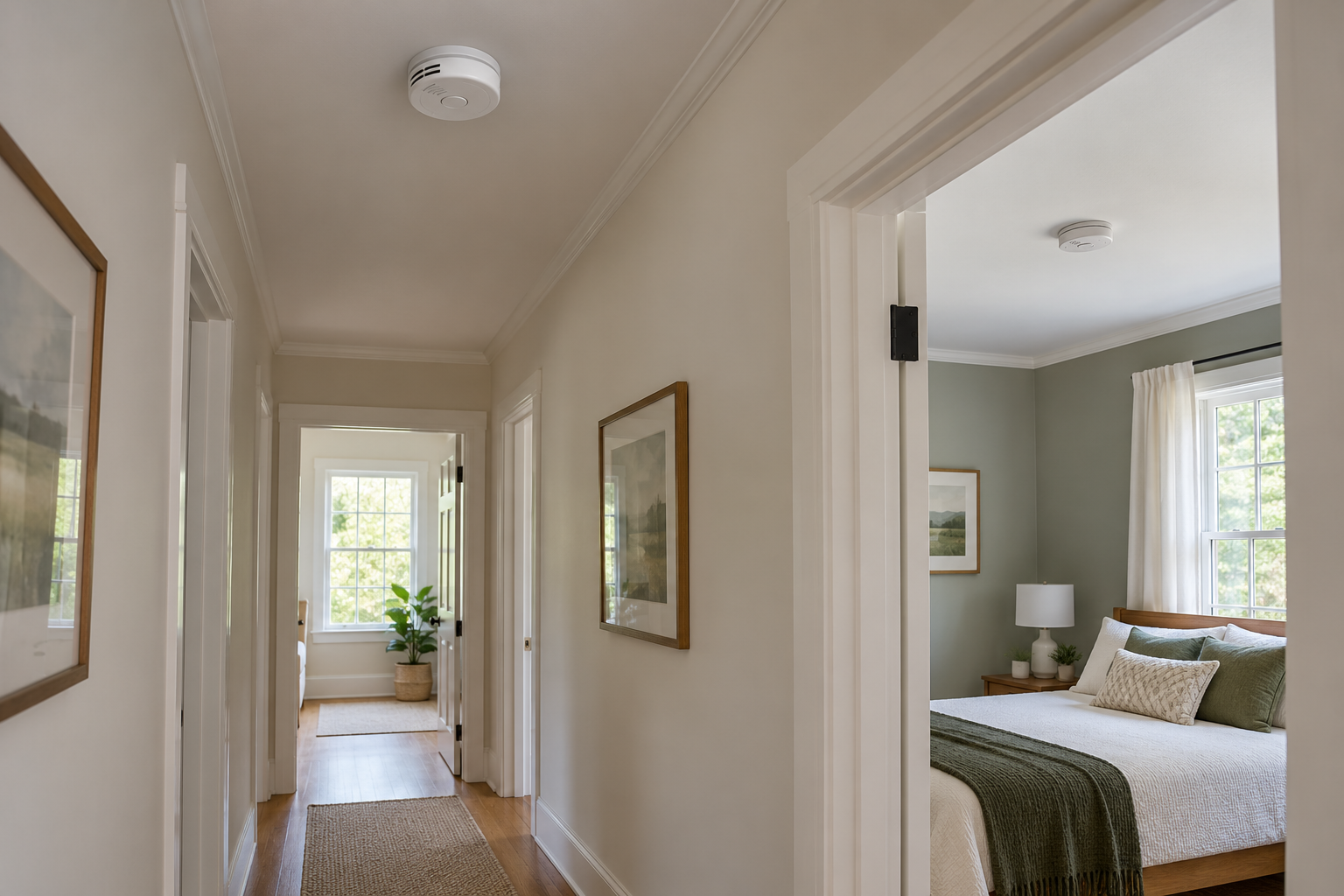
You press the hallway smoke alarm’s test button, hear a loud sound, and feel that the job is done. The test is useful. It does not tell you whether the rest of the home has the right coverage, whether another alarm has expired, or whether every resident can receive the warning.
A room-by-room review turns a vague sense of protection into a list you can check. Use your local fire-safety requirements and each alarm’s instructions as the authority for your home. General guidance helps you identify questions; it does not replace installation rules.
Start with where people sleep
US fire-safety guidance calls for smoke alarms in every bedroom, outside each separate sleeping area, and on every level, including the basement. A single hallway unit therefore should not be treated as complete coverage simply because several bedroom doors open onto that hall.
Sketch the layout or walk through it with a short room list. Mark where people actually sleep, including a room converted into a bedroom. Add separate levels and sleeping areas in an extension. Changes in how a home is used can make an old mental picture of its protection unreliable.
Compare the existing locations with the guidance applicable where you live. If you rent, send the landlord a precise question about the missing location rather than a general message saying the alarms seem inadequate. Keep a record of the response and follow the local process for unresolved safety concerns.
Review the warning as a system
Interconnected alarms sound together when one activates. That can provide a warning beyond the room where smoke is first detected. Compatibility matters: devices cannot be assumed to communicate simply because their boxes use similar wording.
Write down the model of each existing alarm before selecting an addition. Look up the manufacturer’s supported arrangements, and ask a qualified installer where needed. Hardwired smoke alarms should be installed by a qualified electrician. Avoid treating electrical work as an ordinary weekend experiment.
The mounting position matters too. Follow the instructions for the particular alarm, including restrictions near cooking equipment or other sources of nuisance activation. If an alarm regularly sounds during normal cooking, address the cause through appropriate guidance. Removing its battery leaves a different and serious problem.
Check age separately from power
USFA guidance recommends monthly testing using the test button and replacement of smoke alarms at ten years from their manufacture date. Follow any earlier replacement or end-of-life direction in the manufacturer’s instructions. A new battery does not restart an alarm’s service life.
Make an inventory while you have the information available. Record location, model, manufacture date, power arrangement, and the next action needed. “Bedroom alarm: date unclear; check manual or seek replacement advice” is more useful than quietly assuming an unreadable label means the device is recent.
Battery maintenance depends on the model. A sealed-battery alarm and an alarm with a replaceable battery do not have identical procedures. Read the instructions instead of applying a remembered battery rule to every unit. Investigate warning chirps through the manual; do not dismiss them because the alarm still looks normal.
Make sure everyone can receive the alert
A warning needs to reach the person expected to act on it. For residents who are deaf or hard of hearing, appropriate systems may use flashing lights or vibrating pads. Seek a compatible, suitable arrangement rather than assuming a louder standard alarm will solve the problem.
Include the affected person in that discussion. Ask what works where they sleep and how visitors would be accommodated. A phone notification may be useful in some systems, but your review should establish the actual warning arrangements rather than relying on a phone being charged and nearby.
Connect detection to getting outside
Walk through the escape plan with the household. Identify possible ways out, keep exits clear, and agree an outside meeting place. Consider who needs assistance and how that affects the plan. A window shown on a sketch is useful only if it can serve as a safe exit in the actual circumstances.
Discuss calling the local emergency service from safety and staying outside. Do not leave the response as an unspoken assumption that somebody else will organise everyone when an alarm sounds.
Finish your review with three lists: coverage questions, maintenance actions, and escape-plan changes. Resolve them with the appropriate instructions or professional help. Protection comes from locations, working equipment, usable warnings, and a practised response together.