
Why Training and Conditioning Matter in Every Sport
Sports performance is built on more than natural talent or hours spent practicing technique. Whether an athlete competes in soccer, basketball, swimming, tennis, track, martial arts, or recreational leagues, conditioning creates the physical foundation needed to perform consistently. Stronger muscles, better movement control, efficient energy systems, and reliable recovery habits all contribute to improved results.
Training and conditioning should prepare an athlete for the specific demands of competition. A distance runner needs sustained aerobic endurance, while a volleyball player needs explosive jumping ability and quick reactions. A well-designed program identifies these demands and develops the qualities that matter most without neglecting overall health and resilience.
The Core Components of Athletic Conditioning
Complete sports conditioning is not a single workout style. It is a combination of physical qualities that work together. The right emphasis depends on the sport, the athlete’s experience level, competition schedule, and current goals.
Strength and Power
Strength training improves an athlete’s ability to produce and absorb force. Strong legs can support sprinting, jumping, cutting, and landing, while a stable upper body helps with throwing, tackling, racquet control, and body contact. Foundational exercises such as squats, lunges, deadlifts, presses, rows, carries, and pull-ups can be adapted for many sports and fitness levels.
Power is the ability to apply force quickly. It is especially valuable in sports that require acceleration, jumps, throws, and rapid changes in direction. Plyometric drills, medicine ball throws, Olympic-lift variations, short sprints, and controlled jump training can improve power when introduced gradually and performed with sound technique.
Speed, Agility, and Change of Direction
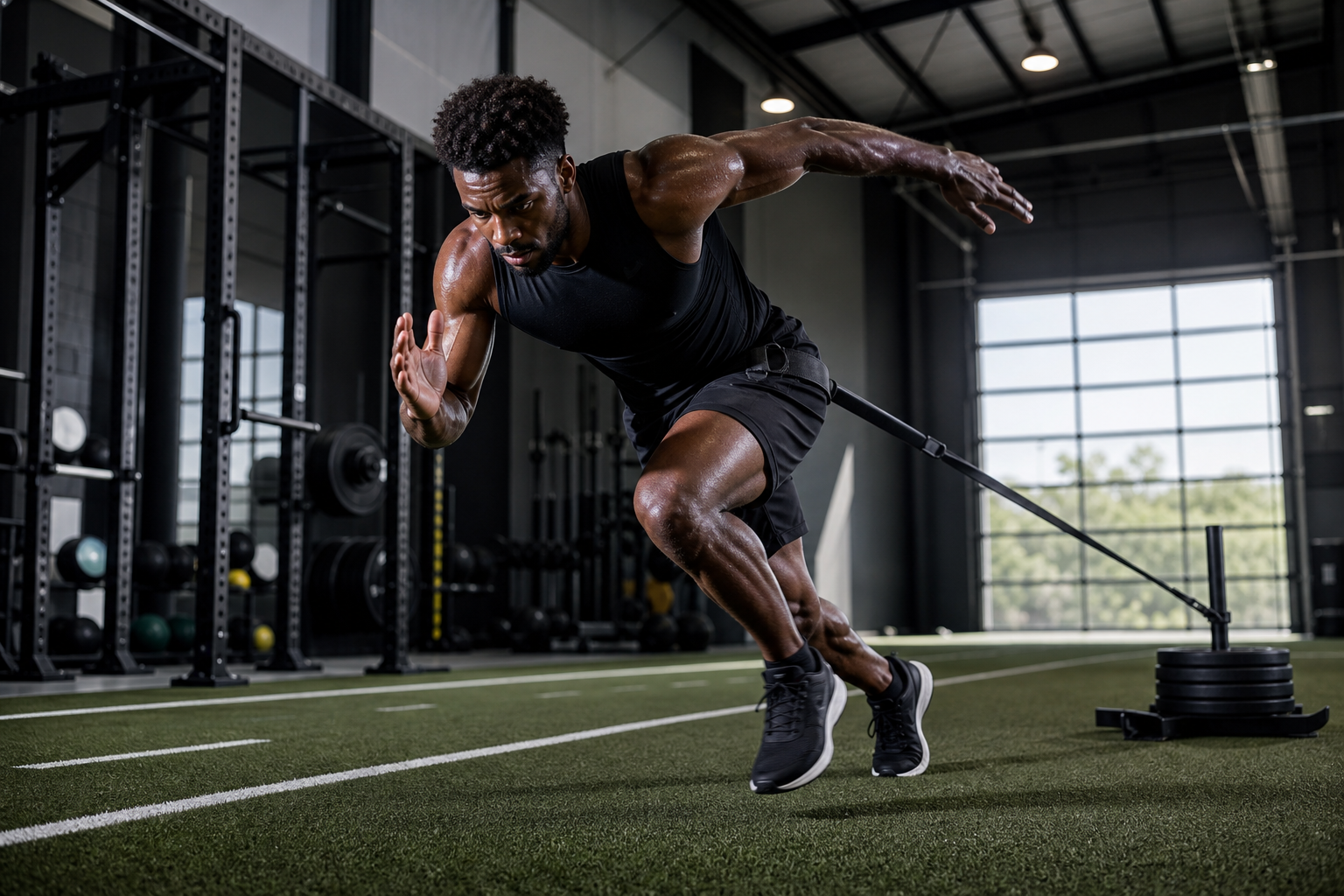
Speed is not limited to running fast in a straight line. In many field and court sports, athletes must accelerate, decelerate, react, cut, and re-accelerate in unpredictable situations. Training should include short sprint mechanics, lateral movement, braking drills, and reactive exercises that resemble the athlete’s sport.
Quality is more important than exhaustion during speed training. Fast movement requires fresh muscles and focused coordination. Short work intervals with full recovery often produce better results than turning every speed session into a conditioning circuit.
Endurance and Energy System Development
Endurance allows athletes to maintain output over the duration of a game, race, match, or training session. Different sports rely on different energy systems. Long-distance athletes need a large aerobic base, while hockey and basketball players need repeated high-intensity efforts supported by recovery between bursts.
- Aerobic training improves general stamina and recovery capacity through steady cycling, running, rowing, swimming, or similar activities.
- Interval training develops the ability to perform repeated hard efforts with planned recovery periods.
- Sport-specific conditioning uses drills that mirror the movement patterns, work-to-rest ratios, and intensity of competition.
Mobility, Stability, and Injury Prevention
Mobility is the ability to move efficiently through a useful range of motion. Stability is the ability to control that movement under load, speed, or fatigue. Both are essential for athletes who need to squat deeply, rotate forcefully, land safely, or reach overhead.
A practical mobility routine does not need to be long or complicated. Dynamic warm-ups can include leg swings, hip openers, arm circles, walking lunges, ankle mobility drills, and light movement patterns specific to the upcoming session. Athletes should also focus on stable knees, hips, shoulders, and trunk control through exercises such as planks, side planks, single-leg balance work, glute bridges, and controlled rotational movements.
Injury prevention is not guaranteed by any single drill. It comes from managing training load, using proper technique, building strength progressively, sleeping adequately, and responding early to pain or unusual fatigue. Athletes should seek guidance from qualified coaches or healthcare professionals when dealing with persistent discomfort or returning from injury.
Building a Weekly Sports Training Plan
A successful training plan balances hard work with recovery. More sessions do not automatically lead to better performance. Too much volume, especially when combined with school, work, travel, and competition stress, can reduce motivation and increase injury risk.
A general weekly structure for an athlete in an active season may include two strength sessions, one or two speed or conditioning sessions, regular sport practice, mobility work, and at least one lower-intensity recovery day. Off-season training may allow more time for strength development, movement quality, and aerobic base building.
Sample Training Priorities
- Begin each session with a dynamic warm-up and movement preparation.
- Perform technical, speed, or power exercises before fatiguing conditioning work.
- Use strength training to address full-body movement patterns, not only visible muscles.
- Increase workload gradually, especially after breaks or injuries.
- Track sleep, soreness, energy, and performance to recognize excessive fatigue.
Recovery: The Often-Missed Performance Tool
Training creates the stimulus for improvement, but recovery is when the body adapts. Sleep is one of the most powerful recovery tools available. Most athletes benefit from consistent sleep schedules, especially during demanding training blocks. Nutrition also matters: regular meals containing carbohydrates for fuel, protein for muscle repair, healthy fats, fruits, vegetables, and adequate fluids help support training quality.
Active recovery can include easy walking, light cycling, swimming, stretching, or mobility work. These activities should leave the athlete feeling better, not more depleted. Rest days are productive days when they allow the nervous system, joints, and muscles to recover for the next challenging session.
Train for Your Sport, Not Someone Else’s Highlight Reel
Social media often promotes extreme workouts, but effective conditioning is usually consistent, progressive, and tailored to the individual. Athletes should focus on measurable improvements such as better sprint times, stronger lifts, improved movement control, greater work capacity, and more consistent in-game performance.
The best sports training plan is one that supports the athlete’s goals, fits their schedule, and can be maintained over time. By combining smart strength work, targeted conditioning, mobility, technical practice, and deliberate recovery, athletes can build durable performance that carries from training into competition.