
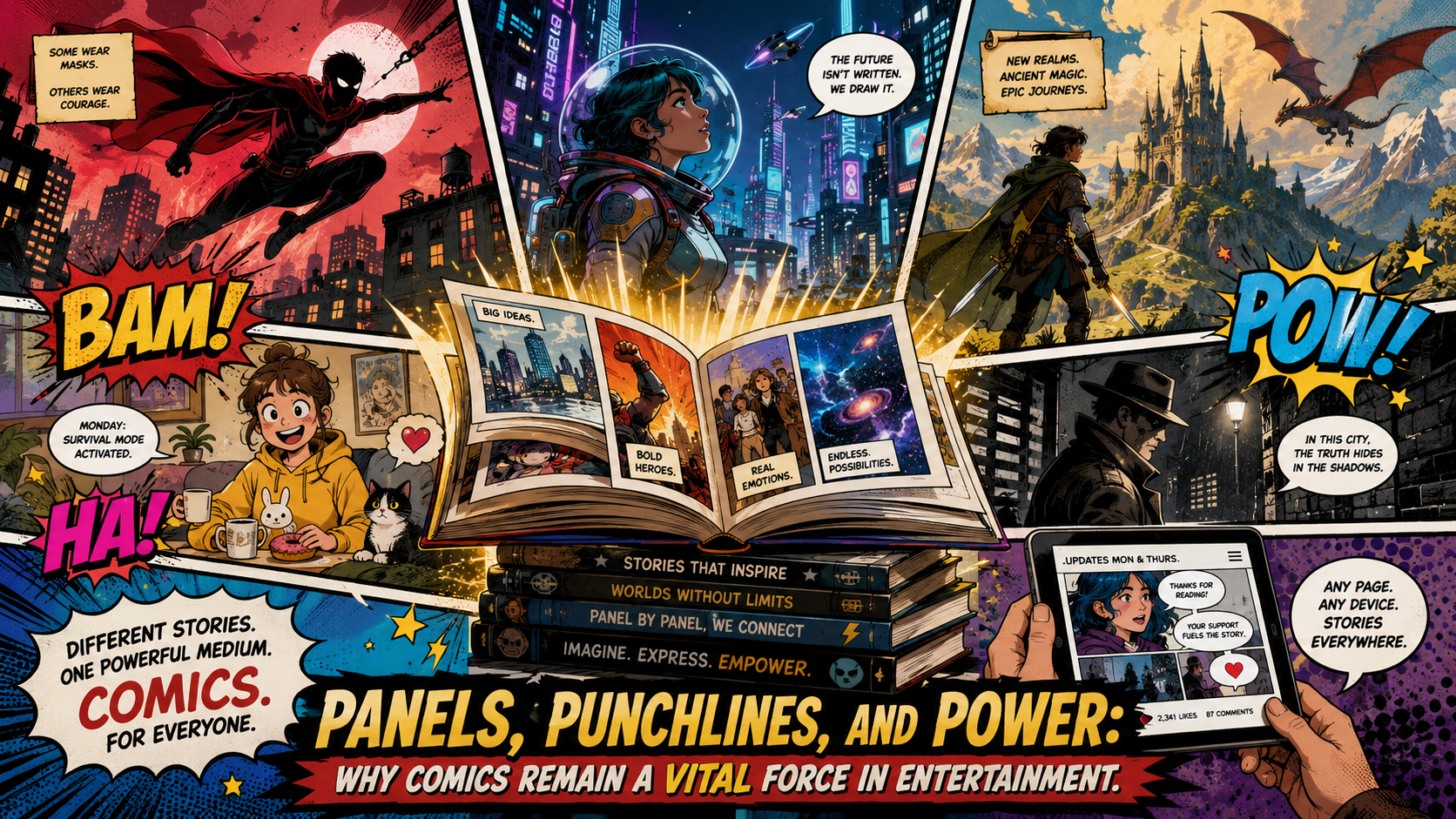
The Enduring Appeal of Comics
Comics occupy a unique place in entertainment because they combine the immediacy of images with the depth of written storytelling. Unlike prose alone or film alone, comics ask readers to participate in the narrative by connecting panels, interpreting expressions, and filling in the action between frames. This interactive quality gives the medium a rhythm and energy that feels personal, immersive, and often unforgettable.
For many people, comics begin as a childhood pleasure, but the medium has long outgrown the idea that it is only for young readers. Today, comics cover nearly every genre imaginable, including fantasy, science fiction, romance, horror, memoir, satire, crime, and historical drama. Whether found in serialized issues, graphic novels, newspaper strips, or digital platforms, comics continue to evolve while maintaining their core strength: telling powerful stories through the union of text and art.
A Brief Look at Comic History
The roots of modern comics can be traced to newspaper strips and illustrated storytelling traditions that predate the twentieth century. Early comic strips introduced recurring characters, visual humor, and episodic adventures to a wide audience. As printing methods improved and readership expanded, comic books emerged as a major entertainment format.
The rise of superheroes in the late 1930s and 1940s transformed the industry. Iconic figures became symbols of justice, courage, and hope during uncertain times. In later decades, comics diversified further, moving beyond straightforward heroism into socially aware storytelling, darker themes, and more complex character development. Independent publishers, international influences, and the graphic novel boom widened the field even more, proving that comics could be literary, experimental, deeply personal, or boldly commercial.
Why Comics Work So Well as Entertainment
Visual Storytelling with Emotional Impact
Comics can communicate mood instantly. A single panel can deliver suspense, humor, heartbreak, or triumph through composition, color, line work, and pacing. Facial expressions, sound effects, and page layouts all shape the emotional experience. This makes comics remarkably efficient while also leaving room for artistic nuance.
Flexible Pacing and Reader Control
Readers set the speed in comics. They can pause on a dramatic splash page, revisit a subtle background detail, or race through an action sequence. This freedom creates a different kind of engagement than film or television, where pacing is fixed. In comics, timing becomes a collaboration between creator and audience.
Endless Creative Possibilities
Because comics are not limited by production budgets in the same way as live-action entertainment, creators can imagine entire universes, surreal dreamscapes, alien worlds, or intimate emotional moments without needing expensive sets or special effects. The only real boundaries are artistic vision and storytelling skill.
The Many Faces of Comics
Although superheroes often dominate public attention, the world of comics is much broader and more varied than many casual readers realize. The medium supports a remarkable range of voices, themes, and formats.
- Superhero Comics: Known for larger-than-life conflicts, moral dilemmas, and iconic characters.
- Graphic Novels: Often self-contained works that explore mature, literary, or experimental storytelling.
- Manga: Japanese comics spanning genres for children, teens, and adults, with global influence.
- Webcomics: Digital-first series that allow independent creators to build audiences directly online.
- Comic Strips: Short-form humor or commentary presented in newspapers and digital media.
- Independent and Alternative Comics: Creator-driven works that often challenge conventions and explore personal themes.
This diversity is one reason comics remain culturally relevant. There is no single comic audience and no single comic style. The medium thrives because it can be both mass entertainment and niche art form at the same time.
Comics and Popular Culture
Comics have had a profound impact on entertainment far beyond the page. Film franchises, animated series, video games, merchandise, and streaming adaptations all draw heavily from comic book worlds and storytelling techniques. Many of today’s most recognizable entertainment brands began as comic characters before becoming global multimedia properties.
Yet the relationship works both ways. Adaptations often introduce new audiences to original comics, while modern comics absorb influences from cinema, television, gaming, and internet culture. This exchange keeps the medium fresh and interconnected with broader entertainment trends.
Comics also shape culture through representation and commentary. They can examine politics, identity, trauma, community, and social change in accessible ways. For readers who rarely see themselves reflected in mainstream media, comics can offer both recognition and empowerment. As publishers and creators expand the range of stories being told, the medium becomes more inclusive and more reflective of real audiences.
The Rise of Digital Comics
Digital publishing has made comics easier to access than ever before. Readers can now discover series through apps, subscription libraries, publisher platforms, and social media. This shift has opened the door for independent creators who may not follow the traditional print-distribution model.
Digital formats have also inspired new storytelling methods. Vertical scrolling comics, motion-enhanced panels, and mobile-friendly layouts demonstrate how the medium adapts to changing technology without losing its narrative essence. While print remains beloved for its tactile quality and collectibility, digital comics have expanded readership and lowered barriers to entry for both creators and fans.
Why Comics Matter Today
In an era crowded with entertainment options, comics remain relevant because they offer something distinct. They reward close attention, encourage imagination, and support a wide range of artistic voices. They can be escapist or serious, fast-paced or contemplative, mainstream or deeply personal.
Comics also matter because they preserve the value of visual literacy. Readers learn to interpret images, symbols, sequence, and subtext all at once. This blend of art and narrative fosters creativity in a way few mediums can match. For young readers, comics can build reading confidence. For adult readers, they can provide emotional depth, intellectual challenge, and artistic appreciation.
The Future of Comics
The future of comics looks expansive rather than limited. New creators continue to enter the field from diverse backgrounds, bringing fresh experiences and styles. Independent publishing, crowdfunding, digital serialization, and cross-media collaboration are all helping comics grow in new directions.
What remains constant is the medium’s core magic: a sequence of images and words that becomes larger than either element alone. Comics entertain, provoke, inspire, and endure because they speak a language that is both ancient and modern. In every panel, they remind us that storytelling does not need a screen to feel cinematic, and it does not need motion to feel alive.