
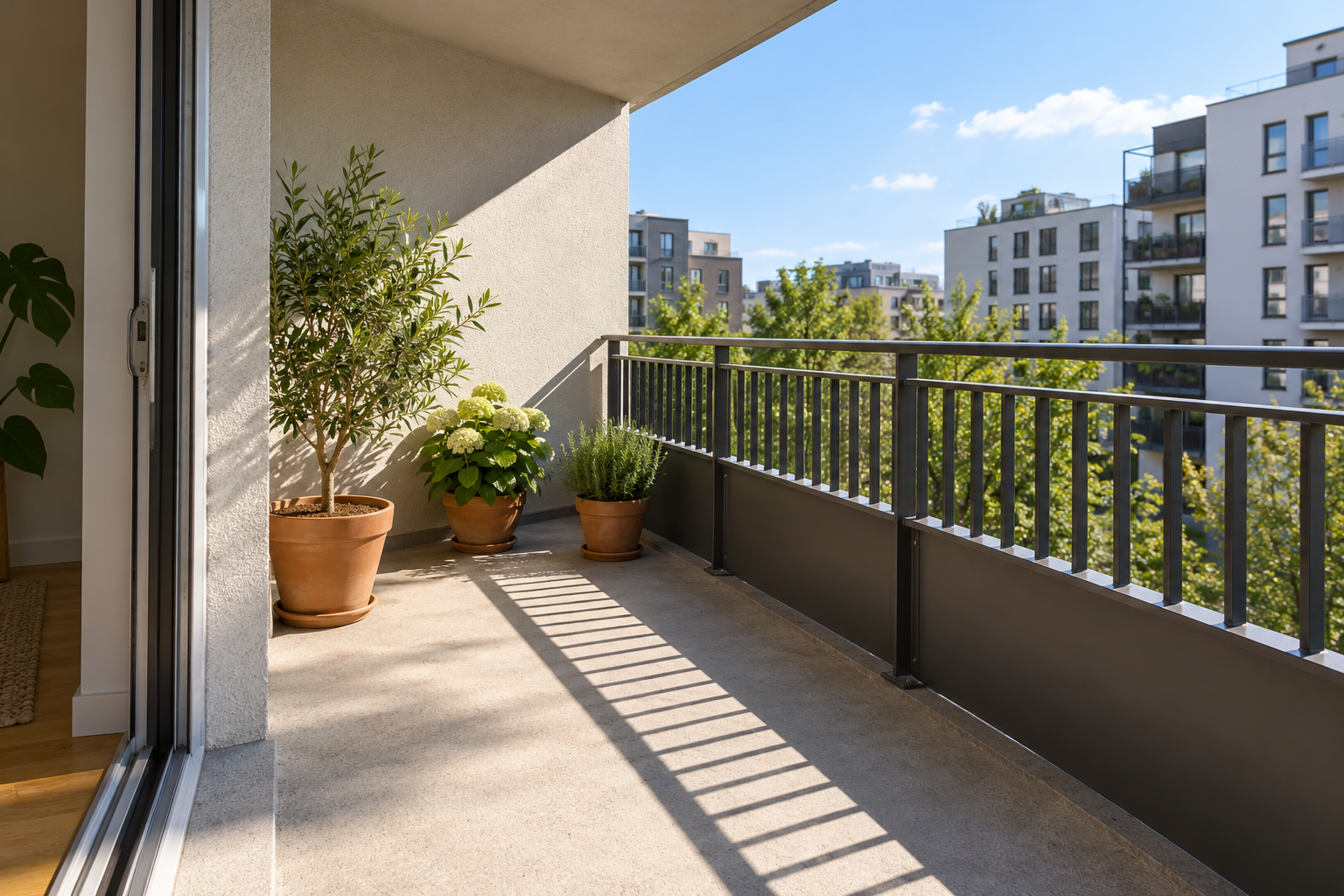
Your balcony looks bright when you open the curtains. That does not necessarily mean the pot beside the wall receives direct sunshine. An overhang can shade the back of the space while a narrow strip near the railing catches several hours of sun.
Before buying a balcony’s worth of plants, observe the places where they will actually grow. A simple sun map can reveal two or three useful positions within a space that initially seems uniform.
Choose the positions before choosing the plants
Sketch the balcony as a rectangle and mark the doorway, walls, railing, and overhead cover. Add a few possible container positions. Use ordinary labels such as “beside door,” “outer corner,” and “near chair” rather than creating a detailed technical drawing.
Keep routes and usable space in mind. A sunny position that blocks the door is not a practical growing position. Check the building’s requirements and get appropriate advice about permitted loads or fixtures before introducing heavy containers or attaching anything to the railing.
For the light survey, focus on a few feasible places. Measuring every centimetre can turn a useful task into a project you never finish.
Watch the light at the height of the leaves
Check the candidate positions in the morning, around the middle of the day, and later in the afternoon. Ask whether sunlight is reaching the place where the plant’s foliage would be, rather than merely illuminating the opposite wall.
Note direct sun, open shade, or a moving mixture. Direct sun produces a recognisable beam and shadow; a space can be brightly lit by the sky while screened from that direct beam. Photographs taken from the same position can help you compare where the shadow edge moves.
Three checks provide a useful first impression, but they cannot establish an exact daily total. If a position is sunny at two observations, you do not know that it stayed sunny throughout the interval. For a more reliable estimate, add checks around the times when shadows arrive or leave.
Record the obstacles doing the shading
Look beyond the balcony’s compass direction. The roof above, a neighbouring building, an opaque railing panel, or your own storage box may determine how much sun reaches a particular pot.
Write down the obstruction you can see alongside your observation. “Outer corner sunny after lunch; back wall shaded by overhang” is actionable. “West-facing” is useful context, but it is not a full description of the growing conditions.
Repeat the checks on another reasonably clear day if possible. Cloud cover can make the first day’s result difficult to interpret. Keep cloudy observations as information about that day’s weather rather than treating them as proof of permanent shade.
Expect the map to change with the season
The Sun’s path changes through the year. A position that receives a useful patch of sunshine in one season may be shaded for longer in another. Orientation also needs interpreting for your hemisphere and local surroundings.
Date your notes. When checking a plant label, consider the part of the year when you want the plant to grow or flower. RHS guidance defines full sun as more than six hours of direct sun at midsummer; terms on labels should be read alongside the needs of the particular plant and your climate.
A single bright weekend does not certify year-round conditions. If you plan to keep plants through several seasons, revisit the map as those seasons change.
Add wind and moisture to the same sketch
Sun is one part of the balcony environment. Mark positions where leaves move strongly in the wind or where containers seem more exposed. Observe these conditions from a safe place rather than experimenting with unsecured objects.
An overhead balcony may prevent rain from reaching a pot even while the street below is wet. Check the container’s moisture directly. Windy, hot conditions can dry containers rapidly, so avoid assuming that the shadier end and sunnier end need identical care.
These notes can help you ask better questions when choosing plants: not simply “Will it grow on a balcony?” but “Will it suit this partly shaded, rain-sheltered corner?”
Test a small arrangement first
Choose a suitable plant for one of the observed positions and begin with a manageable container arrangement. Keep notes about growth and care before expanding the collection. If you move a pot, record the new position so later comparisons make sense.
Your map does not need to be perfect to be useful. It needs to replace one broad assumption with a few observations you can act on, then update as the balcony and your plants change.