
The helmet is on, your gloves are somewhere in a pocket, and another rider is already waiting. This is an awkward moment to discover that you never checked the motorcycle. A useful pre-ride routine begins before the pressure to leave.
Give the walkaround a consistent order and a place in your departure preparations. The objective is to notice a changed condition and make a decision about it, rather than rush through a list to earn permission to ride.
Use a framework, then consult the manual
The Motorcycle Safety Foundation groups its inspection checklist under T-CLOCS: tyres and wheels, controls, lights and electrics, oil and other fluids, chassis, and stands. The letters are a memory aid for areas to inspect, not a substitute for knowing your particular bike.
Read the inspection section of the owner’s manual and keep the relevant requirements accessible. Different motorcycles have different fluid-checking procedures, drive systems, loading requirements, and equipment. A remembered figure from another bike may be inappropriate.
Choose an order that lets you work methodically around the parked motorcycle. If interrupted, return to the last completed part rather than assuming the whole check was done. Familiarity is helpful only when it supports attention.
Measure tyres instead of judging their shape
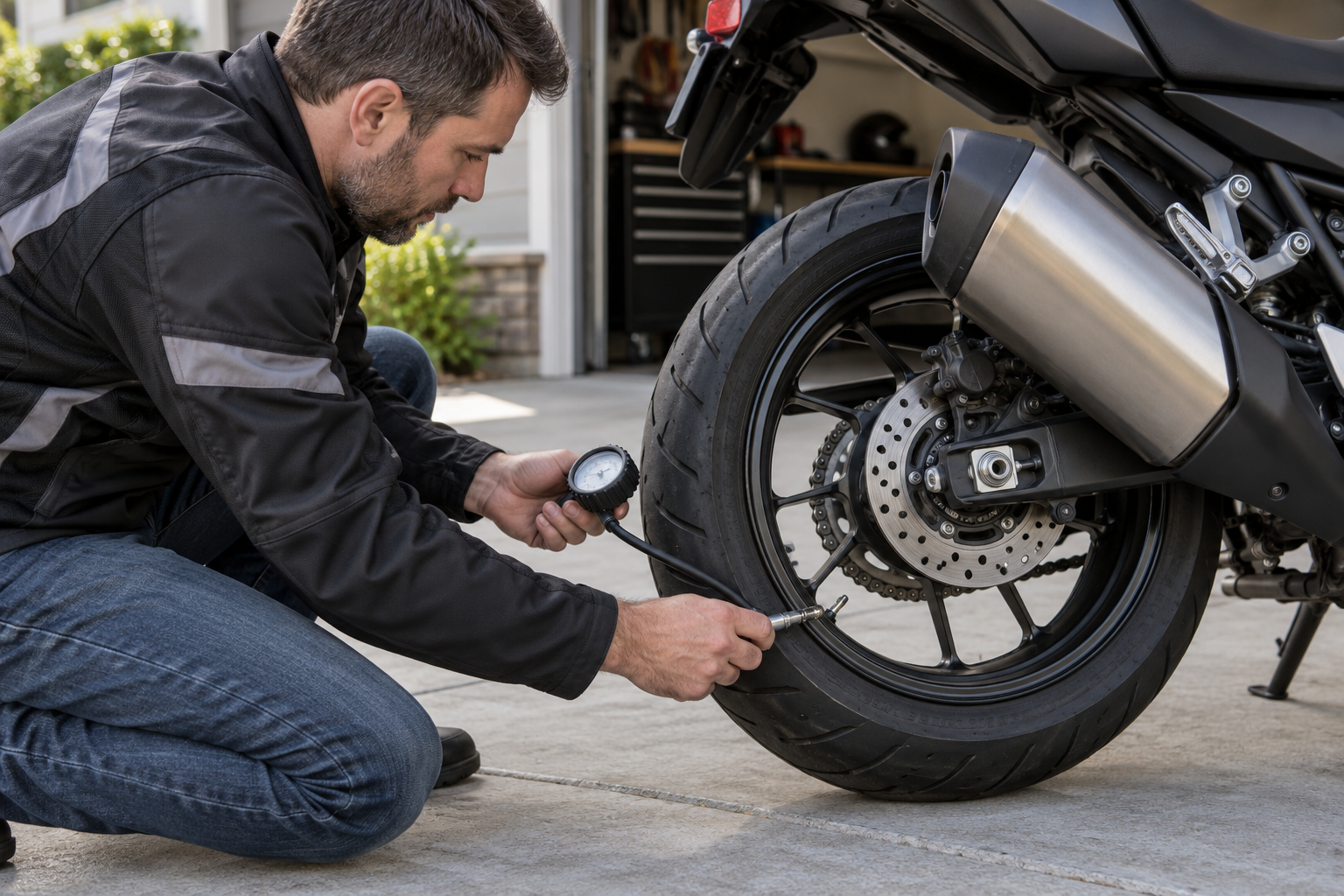
Check tyre pressure when the tyres are cold, using the manufacturer’s recommendations for the motorcycle and its intended load. A tyre can appear plausible without being at the recommended pressure. Use a suitable gauge rather than a squeeze or a glance.
Look at tyre condition as well: visible damage, embedded objects, unusual wear, or bulges need attention. Check tread against the applicable requirements and the manufacturer’s guidance. Pressure and condition are different checks; a correct reading does not make a damaged tyre acceptable.
Consider what changed since the previous ride. Carrying luggage or a passenger is a reason to review the specified loading arrangements before departure. Do not invent an adjustment from a general rule of thumb.
Check what your hands and feet depend on
Inspect accessible controls for damage, interference, and the operation described in the manual. A lever that feels different or a control that does not return as expected is information to resolve before riding.
Follow the specified brake checks. Do not turn a road journey into a test of whether a suspected fault will disappear. If you are uncertain about a change in braking or control operation, arrange qualified assessment.
Make sure added accessories or luggage do not interfere with normal operation. A bag that seemed secure when packed may shift into an inconvenient position. Recheck the final arrangement after loading rather than relying on the empty-bike inspection.
See the lights from outside the saddle
Check the headlight, indicators, and brake light as appropriate for the bike. Where the brake light should respond to separate controls, verify the relevant operation. Ask another person to observe if that is the practical way to see it safely.
Clean and position mirrors before leaving. Adjust them from your normal riding position, with the motorcycle safely supported as required. A pre-ride inspection is less useful if the first part of the journey becomes a series of equipment adjustments.
Notice loose or damaged fittings and lenses. Record a fault clearly enough that it can be explained later: which lamp, which control, and what happened when you operated it.
Look for leaks and changes in the parked bike
Inspect fluid levels and visible leakage using the manual’s procedure. Check the parking area as well as the motorcycle. A new mark on the ground is a prompt to investigate; do not assume every fluid has the same significance or can be identified reliably by a quick glance.
Include the visible condition of the chassis, drive components, and stand in your routine. Detailed adjustment, lifting, and servicing require the correct procedures, equipment, and competence. This walkaround does not teach those jobs.
Make an explicit go-or-stop decision
If a safety-related condition is abnormal or uncertain, postpone the ride and obtain appropriate help. “I will look properly afterwards” is not a useful resolution to a problem that could affect control of the motorcycle.
Keep a small note of recurring observations and completed maintenance. That can help explain a change to a technician, while scheduled servicing remains necessary even when the walkaround finds nothing unusual.
Finish the bike check before moving on to your protective equipment and journey preparations. The routine works best when it is ordinary, repeatable, and given enough attention to change your departure decision when needed.