
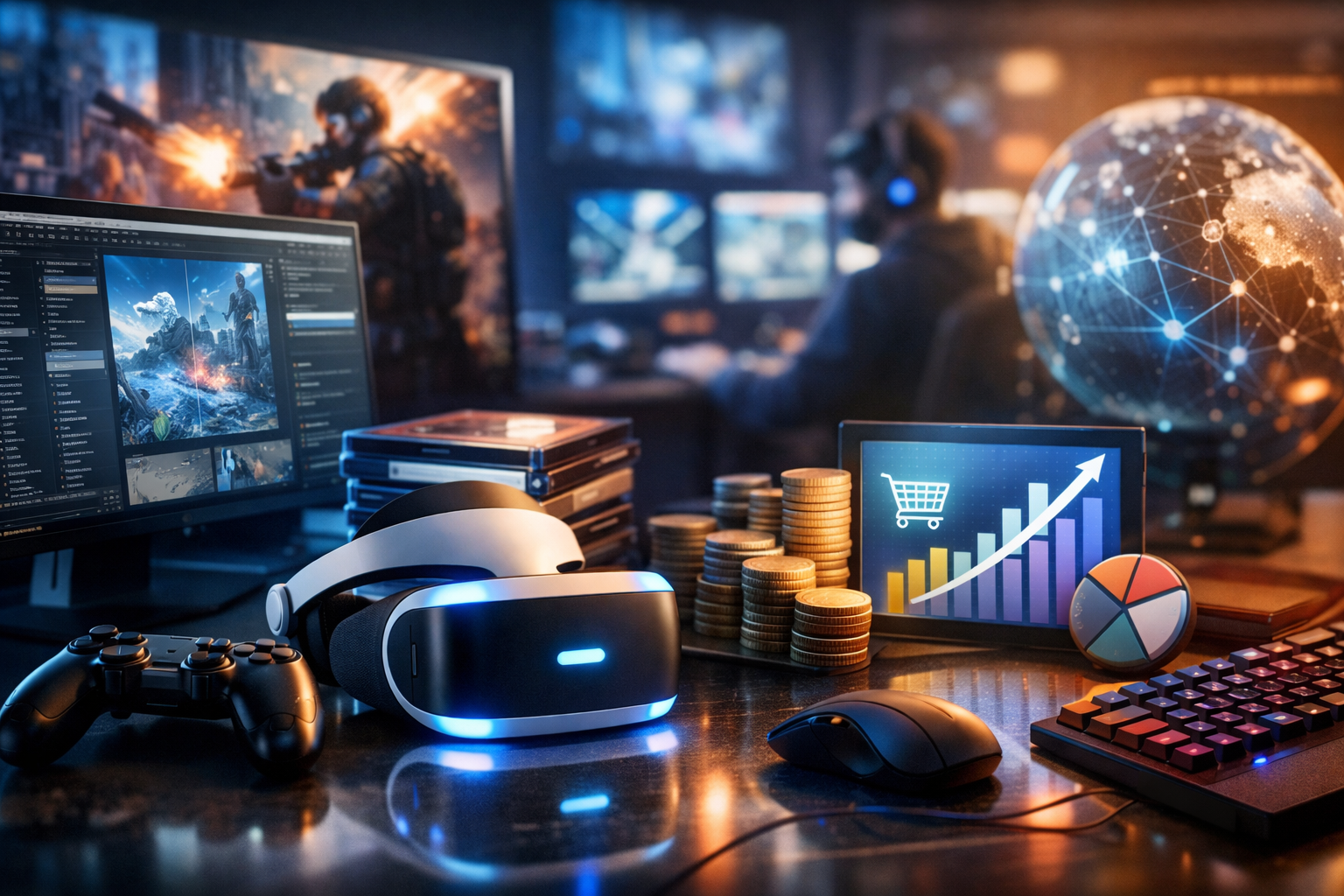
The Gaming Industry Enters a New Phase
Gaming industry news is no longer defined only by blockbuster releases and console launches. Today, the business of games is shaped by larger forces: economic pressure, changing consumer expectations, rapid advances in technology, and fierce competition across platforms. What was once a sector driven mainly by premium game sales has expanded into a complex ecosystem that includes subscriptions, live-service content, mobile monetization, creator economies, cloud delivery, and cross-media storytelling.
For players, these changes affect how games are discovered, purchased, and supported over time. For developers and publishers, they influence everything from staffing plans to platform strategy. Recent industry developments suggest that gaming is becoming both more interconnected and more competitive, with success depending not just on a single launch day but on long-term engagement and adaptability.
Rising Costs Are Changing Development Strategy
One of the most important stories in gaming industry news is the rising cost of game development. Large-scale titles now require bigger teams, longer production cycles, and more advanced tools than ever before. High-end visuals, voice acting, motion capture, online infrastructure, accessibility features, and post-launch support all add significant expense.
As budgets grow, publishers are becoming more selective. Many companies are prioritizing proven franchises, sequels, remakes, and established intellectual property because they offer a clearer path to commercial success. This does not mean new ideas are disappearing, but it does mean original projects often face stricter evaluation and higher pressure to stand out quickly.
Independent studios remain a vital source of innovation, often exploring creative concepts and niche genres that larger publishers may avoid. However, indie teams also face rising marketing costs and tougher discoverability challenges in crowded digital storefronts. As a result, success increasingly depends on strong community-building, strategic publishing partnerships, and careful platform selection.
Live-Service Gaming Continues to Influence the Market
Live-service gaming remains one of the biggest forces in the industry. Instead of relying only on one-time purchases, many publishers now focus on games designed to retain players for months or even years through regular updates, seasonal events, battle passes, and in-game purchases.
This model can create reliable long-term revenue, but it also brings risk. Maintaining a live-service title demands consistent content production, technical stability, active moderation, and a clear understanding of player behavior. When these elements align, a game can develop a loyal, highly engaged audience. When they do not, even well-funded projects can struggle to maintain momentum.
Recent news across the sector has shown that publishers are becoming more cautious about launching too many live-service titles at once. Competition for player time is intense, and audiences are increasingly selective about which ongoing games deserve their attention.
Why Live-Service Still Matters
-
It extends revenue beyond launch week.
-
It helps build long-term player communities.
-
It supports regular content updates and cross-promotions.
-
It provides developers with ongoing gameplay data and feedback.
Subscriptions, Cloud Gaming, and Access Models
Another major topic in gaming industry news is the rise of access-based business models. Subscription services have changed how many players think about value, allowing them to explore a larger catalog for a monthly fee rather than purchasing every title individually. For publishers, subscriptions can offer exposure, recurring revenue opportunities, and access to broader audiences.
Cloud gaming continues to develop alongside this trend, promising the ability to play high-end games on more devices without expensive hardware. While infrastructure, latency, and licensing remain obstacles in some markets, cloud technology still represents a long-term strategic area for major companies. It also aligns with broader industry goals around ecosystem expansion and user retention.
Even so, traditional ownership models remain important. Many players still prefer to buy games outright, especially major single-player releases. The likely future is not a complete replacement of one system by another, but a mixed market where premium sales, subscriptions, cloud access, and free-to-play models coexist.
Consolidation and Restructuring Remain Key Storylines
Mergers, acquisitions, and internal restructuring continue to shape the industry. Large companies have spent heavily to expand their portfolios, strengthen platform ecosystems, and secure popular franchises. At the same time, many studios have faced layoffs, project cancellations, and operational resets as companies seek efficiency after periods of rapid expansion.
This creates a difficult contrast in gaming industry news: strong consumer demand for games exists alongside visible business instability. Restructuring often reflects the challenge of balancing ambitious production pipelines with uncertain economic conditions. It also highlights how difficult it is to predict long-term trends in an industry where player tastes can shift quickly.
For workers, these developments raise ongoing concerns about job security, leadership planning, and sustainable production practices. For consumers, they can affect release schedules, support timelines, and the future of favorite franchises.
AI, Tools, and the Future of Production
Artificial intelligence is becoming a closely watched topic in game development. Studios are exploring AI-assisted workflows for animation, testing, localization, asset iteration, and quality assurance. Supporters see these tools as a way to improve efficiency and help teams manage increasingly complex projects.
However, the use of AI also raises questions about labor, creative ownership, and quality control. Many developers believe these systems should assist human creators rather than replace them. The companies that use AI most effectively will likely be those that apply it carefully, transparently, and in ways that genuinely improve production without undermining artistic direction.
What Players Can Expect Next
The next wave of gaming industry news will likely focus on sustainability as much as spectacle. Big announcements and major releases will always attract attention, but the deeper story is about how the industry builds durable business models in a changing market. Companies are under pressure to reduce risk, improve efficiency, and retain audiences over longer periods.
Players can expect more cross-platform play, stronger integration between games and online communities, and continued experimentation with pricing and access. They can also expect sharper competition for their time, with publishers trying to offer not just great games but complete ecosystems of entertainment.
Ultimately, the gaming industry remains one of the most dynamic sectors in media. Its news cycle reflects both opportunity and uncertainty, driven by technological innovation, audience demand, and the constant challenge of creating experiences that stand out in a crowded market. For developers, publishers, and players alike, the industry’s next chapter will be defined by flexibility, strategic investment, and the ability to adapt without losing sight of what makes games compelling in the first place.