
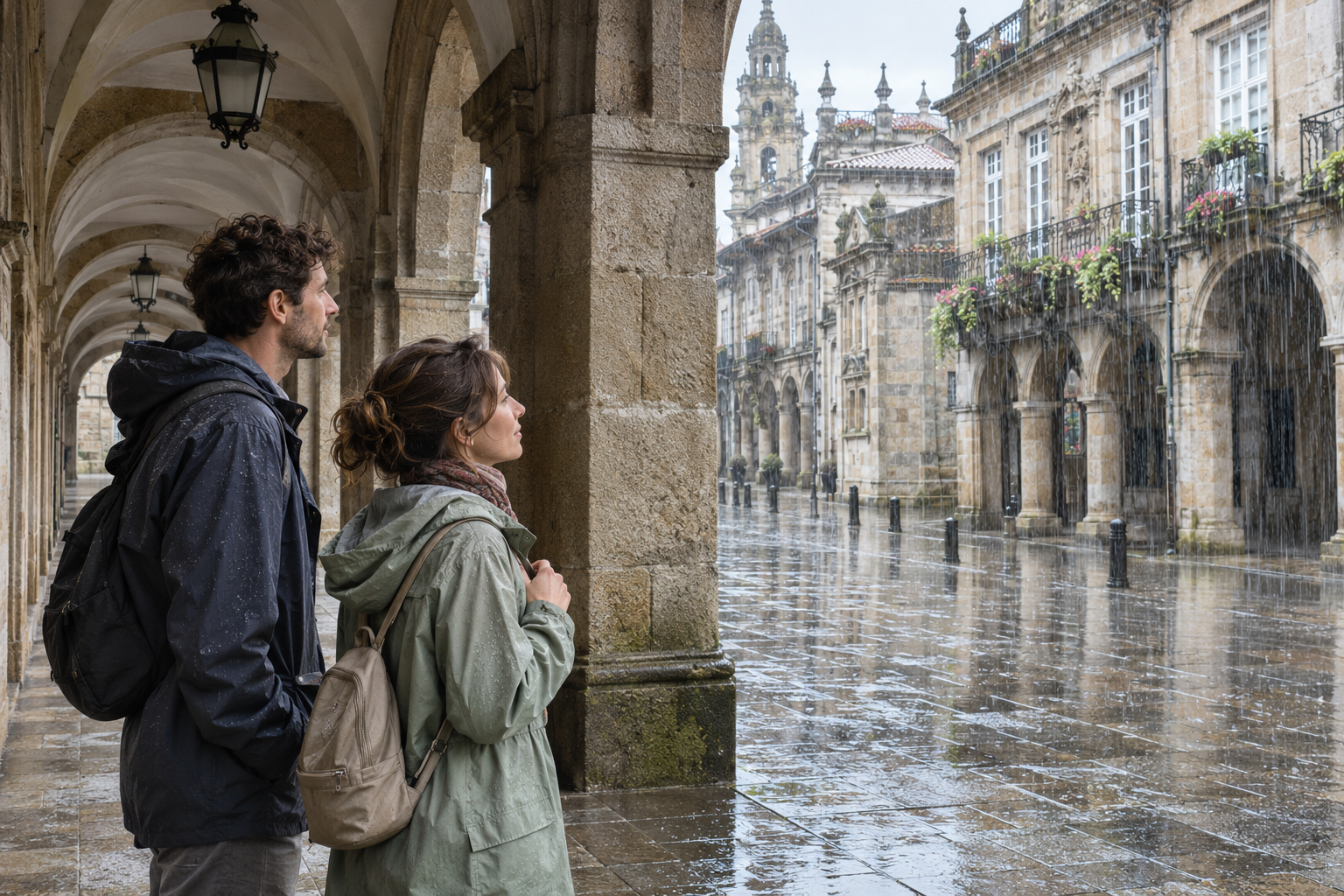
A museum morning, a long lunch, and an afternoon exhibition look like a sensible rainy-weekend plan. Yet the day may still contain a walk from the station, an uncovered admission queue, and a final stretch back to the hotel after dark.
Indoor activities are only part of the itinerary. Planning the transitions between them helps you decide whether the weekend will feel comfortable in ordinary rain, and when changing conditions require a different decision.
Draw the journey between the doors
List the places you intend to visit, then write down each connection. Include the arrival station or parking area, accommodation, meals, and the final departure point. An attraction’s indoor setting says little about the route needed to reach it.
For every connection, note what you know about walking, waiting, and access. Is the entrance the one facing the nearest stop? Does the suggested shortcut use a park path? Will a transfer involve leaving one station entrance and finding another?
Keep unknown details visible. A map can show a short distance without telling you whether the pavement is sheltered or whether the convenient door is open to visitors. Mark those points for checking instead of quietly treating them as solved.
Separate travel time from exposed time
A route that takes slightly longer overall may involve less time outdoors. Another may look efficient because it omits the wait at an uncovered stop. Compare the full experience, not just the journey-planner headline.
Consider a hypothetical arrival with a ten-minute walk followed by an outdoor queue. Moving the museum booking earlier could leave less room to dry off or deal with a delayed train. The useful adjustment might be a later entry time, rather than another attraction.
Avoid filling every interval with the next reservation. Leave enough margin to remove wet layers, store a bag where permitted, and enter without rushing. Ask venues about cloakroom arrangements if those details affect your visit.
Check how admission actually works
An indoor venue may ask people to queue outside before their timed entry. A restaurant may open its doors only at a stated time. A covered market may include exposed gaps between sections.
Read the venue’s own visitor information and ask a focused question where necessary: “Where do visitors wait before the booked entry time?” is more useful than “Is this good in the rain?” Check current opening and admission arrangements near departure.
Do not assume that arriving very early guarantees an indoor waiting place. If the venue cannot accommodate early arrivals, choose a suitable nearby option only after checking that it is open and usable for your group.
Make the route workable for the people travelling
Discuss what each person can comfortably manage. Someone using a mobility aid, travelling with a pushchair, or needing frequent rests may experience the same route differently. A staircase shortcut or a long standing queue can matter more than a small distance saving.
Ask about relevant features rather than relying on a broad description. If a step-free entrance is on another street, include that approach in the plan. If the group needs a seated pause, identify an actual suitable place rather than assuming one will appear.
Choose clothing and bags for the journeys you have identified. Keep items that must stay dry protected inside the bag. Bring familiar footwear suitable for the expected conditions instead of discovering its limitations during the first transfer.
Use forecasts and warnings for different decisions
A forecast helps you prepare for likely conditions. Official warnings can describe potential disruption and safety impacts that require reconsidering the journey itself. Check the relevant authority for your destination, including the affected area and time period.
For UK trips, the Met Office explains warnings through both the likelihood and the potential impact of the weather. Read the details rather than making a decision from a colour or a rain symbol alone.
Recheck transport operators and venues when disruption is possible. An indoor booking does not make the route to it safe or guarantee that the service you need will run. Follow official advice where conditions become hazardous.
Keep the last connection in view
Before leaving for the final activity, confirm how you will return to your accommodation or reach your departure point. Save the relevant address and reservation details in a form you can access without a reliable connection.
A good rainy-weekend plan includes the space between the attractions. Once those connections are understood, the indoor visits can provide the enjoyable pause you intended.