
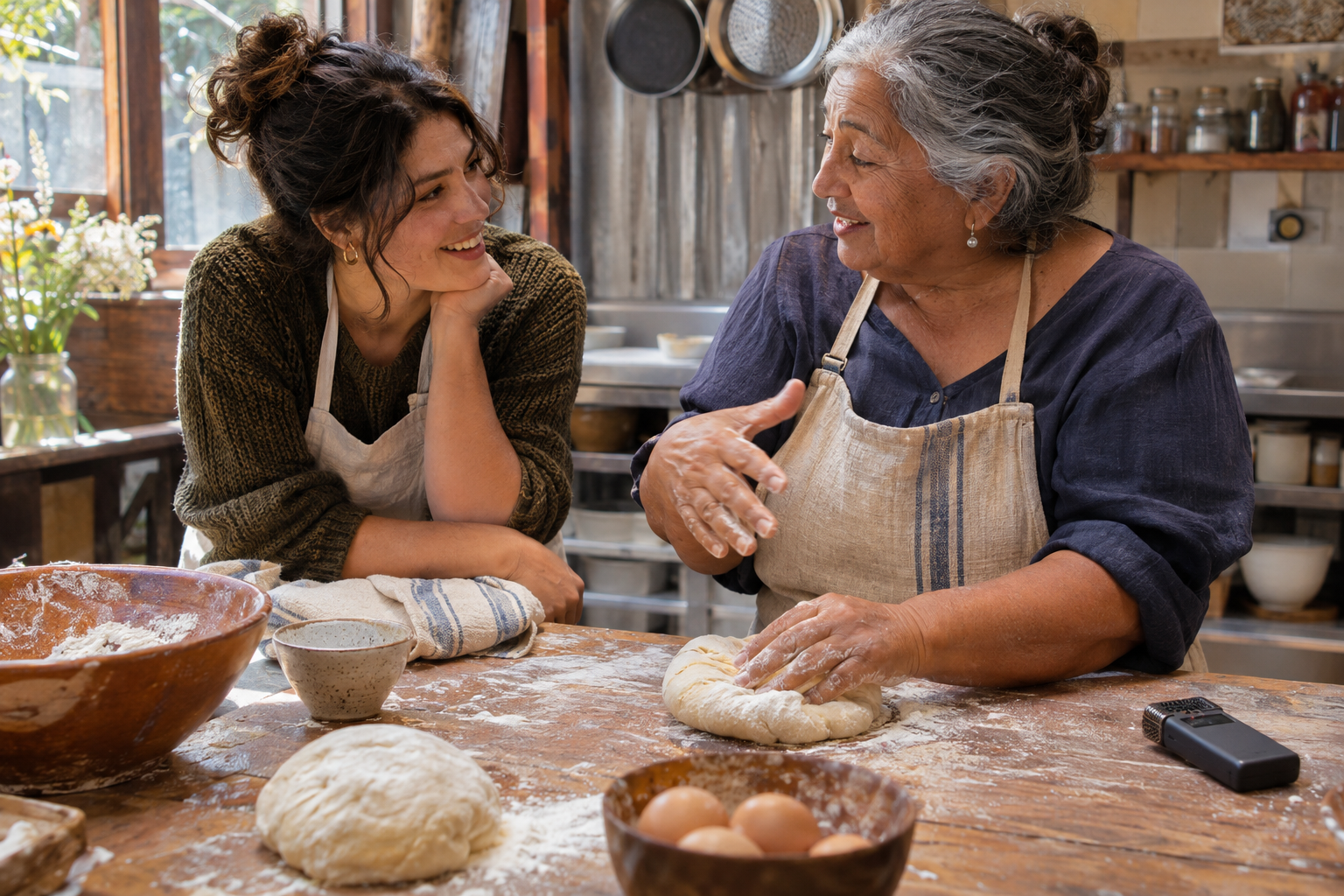
A recipe may say to add a handful of flour. The person who shared it may also know which bowl was used, who usually cooked, and why the dish changed when a particular ingredient became hard to find. Those details belong beside the instructions if a community collection is meant to preserve people’s stories.
You do not need to turn every contribution into a long interview. You do need to decide what you are collecting, what contributors agree to share, and how readers will distinguish one person’s version from a claim about an entire community.
Explain the destination before asking for memories
A booklet for a neighbourhood supper and a searchable public website have different audiences. Say which you are making before recording anyone. Explain whether their name, photograph, voice, translated words, or family details might appear, and who will hold the original material.
Make permission specific. Someone may be comfortable sharing a recipe while keeping a story about a relative private. Another person may want their name attached to the dish but prefer not to be photographed. Record the agreement and give them a clear contact for questions.
Offer a chance to check their contribution before release. Set a realistic review date and explain what can still be changed. Do not promise that material can be retrieved from every printed copy or download once distributed.
Ask about a particular occasion
Questions about an actual occasion can produce more useful context than asking someone to explain their whole culture. Invite them to choose an example they want to discuss:
- When would you usually make this dish?
- Who taught you this version, if you know?
- Which steps do you judge by sight, touch, or sound?
- What would you change when cooking for a different number of people?
- Is there anything about the dish you would prefer readers not to assume?
These are invitations, not a checklist to force through. A contributor can skip a question. If a recollection involves other people, pause before including identifying or sensitive details about them.
Keep variations visible
Two neighbours might contribute dishes with the same name and different ingredients. Give each version room. A collection does not need to elect one household’s method as the official recipe.
Use descriptions such as a contributor’s weekday version or the version they learned from an aunt, when those descriptions are supported by what they shared. Avoid upgrading an individual’s account into an assertion that everyone in a region cooks the same way.
Translation deserves similar care. Ask whether the contributor wants the original dish name retained and how they would like it written. If a word has no simple equivalent, a brief explanation may be more accurate than replacing it with a familiar but misleading label.
Separate remembered instructions from editorial changes
A contributor may describe quantities informally. If you later weigh an ingredient or adapt the method for a different pan, identify that work as an editorial adaptation. Do not silently present your measurement as theirs.
Keep the submitted version, your questions, and the approved page together in the project files. Record who clarified a step and when. This makes a later correction possible without relying on the memory of whichever volunteer assembled the booklet.
A historical or remembered method also needs a separate decision about whether it is suitable to publish as cooking advice. If a preparation raises a safety question, obtain appropriate guidance before offering it as a usable recipe. Preserving a recollection and recommending a method are different editorial responsibilities.
Give credit that people recognise
Ask contributors how they want to be named. Check spelling, pronunciation notes if relevant, and whether a household or group should also be acknowledged. Credit translators, interviewers, photographers, and recipe editors for the work they actually did.
Let contributors see the surrounding page, not only an isolated quotation. A heading or photograph can imply something the approved words do not. Context should be part of the review.
Finally, decide who will keep the collection, answer correction requests, and pass on the project files when the organising team changes. Share the finished work with the people who made it possible. The recipe becomes more useful when its route into the collection remains visible: a particular person chose to share this version, in these words, for this purpose.