
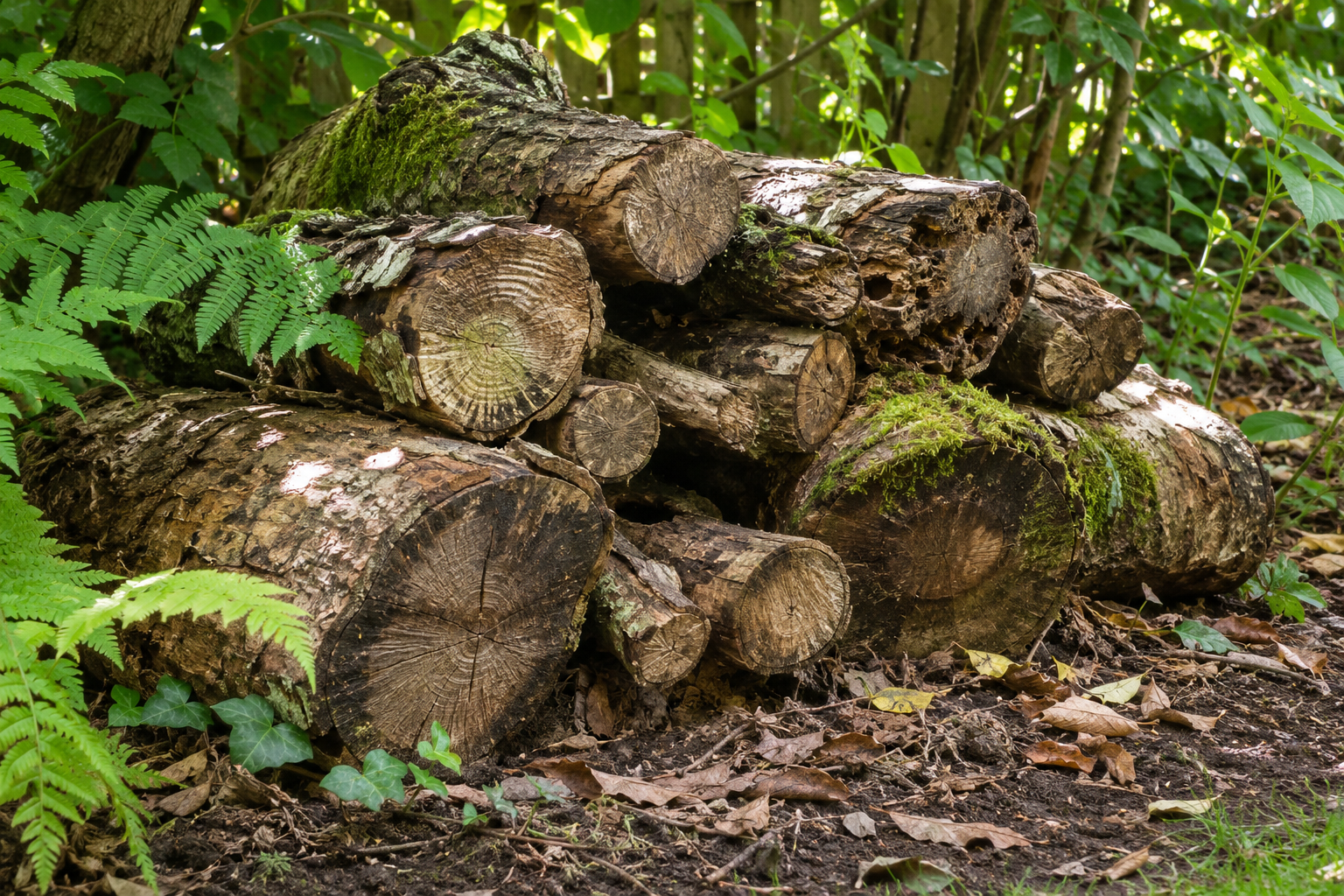
A few logs left after garden work can become a useful habitat. The difficult decision is often where to put them. A stack beside the shed may have to move every time you fetch the mower, while a pile in a future planting area may soon be dismantled.
Choose a place where the wood can remain. A log pile’s value develops through shelter, moisture, and decay, so repeated rearrangement can work against the reason for making it.
Decide which space you can leave alone
Look for a suitable part of a border or another quiet garden area that will not be needed for routine access. Consider how you use the space throughout the year, including reaching fences, clearing drains, and carrying tools.
A modest pile in a workable position is preferable to a larger feature that repeatedly gets in the way. Sketch its footprint or mark the proposed space before collecting more material.
Think about future changes too. If a wall needs repair or a path is due to be altered, avoid placing a new habitat directly in that working area. You can choose another location without abandoning the idea.
Use suitable wood from an appropriate source
Natural logs from necessary garden tree work can provide a starting point. Bark and irregular surfaces create different sheltered spaces as the wood ages. Avoid treating painted boards or chemically treated fence posts as equivalent material.
Do not collect fallen logs from woodland to furnish the garden. Those logs already have a role where they lie. Ask about suitable material from your own garden work or an appropriate local supplier instead.
If wood comes from a tree affected by disease, get informed advice about handling and disposal rather than moving it into a new garden feature. The RHS distinguishes ordinary decay from particular disease problems; unfamiliar fungi should not be diagnosed from a quick glance.
Give the lower logs contact with the ground
Ground contact helps create a different environment from a dry stack kept entirely above the soil. Woodland Trust guidance recommends leaving log piles directly on the ground in dappled shade to help maintain humidity.
Choose manageable pieces and arrange them low and securely. Do not turn a small habitat project into a tall, unstable structure. Leave the handling of heavy or awkward material to someone with suitable equipment and experience.
A variety of log sizes can create different spaces without needing an elaborate design. You do not need to fill every gap or make the ends align like a furniture display. The aim is a stable arrangement that can age in place.
Understand what happens as wood decays
Deadwood provides food and shelter for fungi and invertebrates. Damp areas beneath bark and between logs can differ from the drier exposed surfaces. Other wildlife may use the shelter or feed on creatures living there.
That does not guarantee a particular animal will arrive. The surrounding habitat, local species, conditions, and time all matter. Avoid buying or relocating animals to populate the pile.
Changes in texture, softer wood, and natural fungal growth can be part of decay. The pile is not failing simply because it no longer looks newly assembled. Its purpose is different from storing logs in pristine condition for later use.
Plan the maintenance around the habitat
Tell anyone helping with the garden which wood is being retained. Otherwise a well-meant tidy-up may remove the pile or add its logs to material destined for disposal.
Keep the surrounding access route clear enough for normal garden work. You can maintain nearby planting without regularly lifting the logs to see what is underneath. Observe from the edge and let the sheltered spaces remain sheltered.
If you later add suitable wood, consider how to do so without taking the existing pile apart. There is no need to rebuild it each season to restore a particular outline.
Notice changes without demanding a result
A photograph from a consistent position can record how the pile settles and how nearby planting grows. Note what you can see without disturbing it: changes in bark, visible fungi, or activity around the edges.
Keep uncertain identifications uncertain. A garden habitat does not need a dramatic wildlife sighting to justify leaving it in place, and a short observation period cannot reveal everything using its hidden spaces.
The most useful contribution may be a modest patch of continuity. Suitable wood, a stable position, and a plan to leave it alone give the habitat time to become part of the garden.