
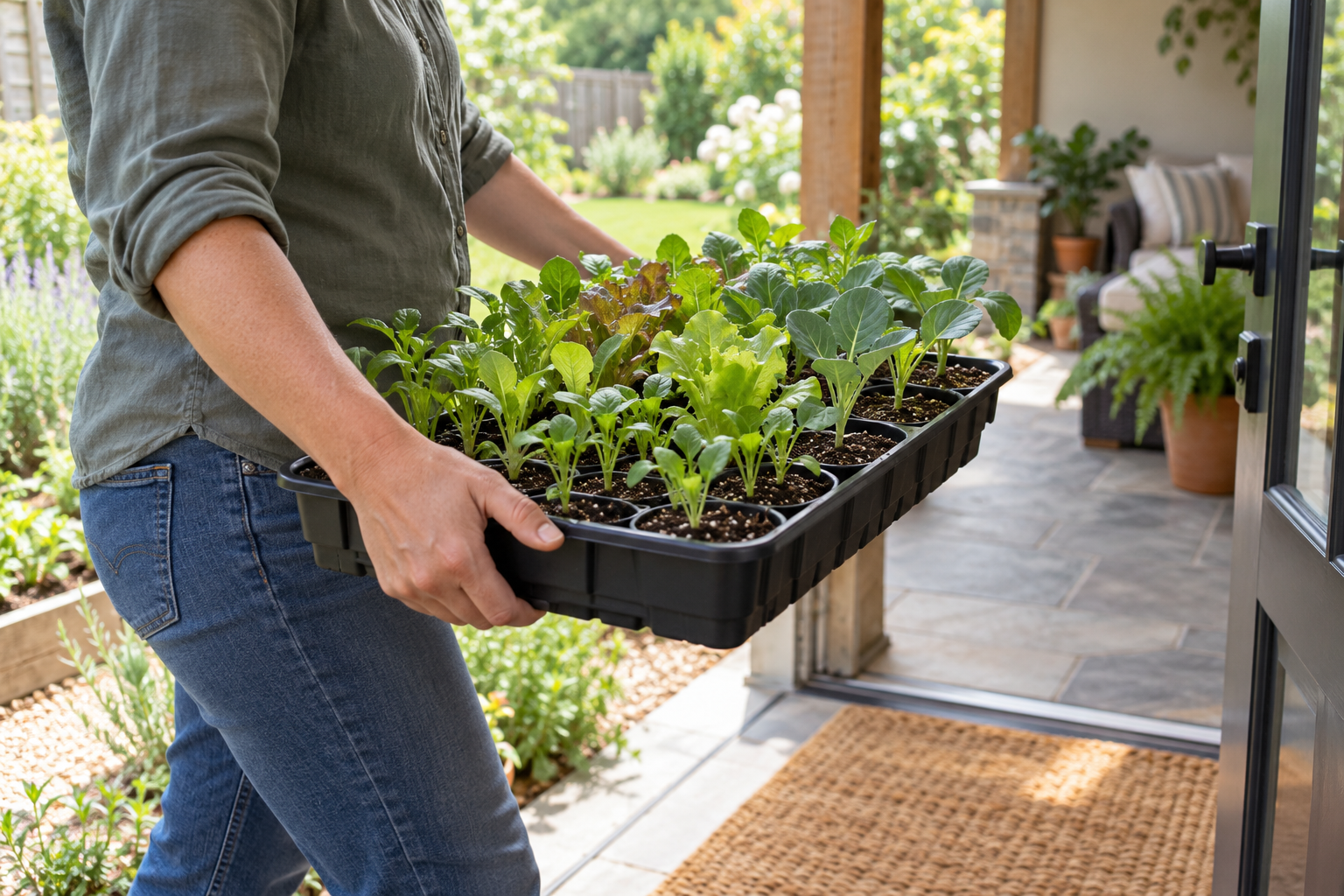
A tray of seedlings can look ready for the garden before it is ready for garden conditions. Indoors, light, air movement, and temperature are relatively controlled. Outside, the same leaves may suddenly face direct sunshine, drying wind, and a cold evening.
Hardening off is the gradual transition between those settings. It gives plants time to adjust before they are planted permanently outside. Think of it as managing exposure rather than making seedlings endure the worst weather you can find.
Choose the planting window first
Check the needs of the plants you are growing and the conditions expected in your location. Tender crops and hardy plants do not have identical temperature requirements. A pleasant afternoon is not proof that the following night will be suitable.
Work backwards from a realistic planting window, leaving time for the transition. Published guidance varies: some vegetable-seedling advice suggests roughly one to two weeks, while the Royal Horticultural Society describes hardening off tender plants over about two to three weeks. These are planning guides, not guarantees that every plant will be ready on a particular day.
Allow room for interruptions. If the forecast becomes colder or windier, you may need to slow down. A calendar should help you remember the process, rather than pressure you into leaving a tray outside in unsuitable conditions.
Make the first outing sheltered
Begin on a suitable mild day in shade, protected from strong wind. University of Minnesota guidance suggests starting with a few hours during the warmer part of the day and bringing plants back inside before temperatures fall at night.
Choose a stable place where the tray cannot easily be knocked over. A sheltered patio or similar spot may be useful, but inspect the actual conditions. A gap between buildings can channel wind, and a location shaded in the morning may receive strong sunshine later.
Set a reminder to bring the seedlings back. The logistics matter as much as the intention. If nobody will be home to move them when conditions change, start with an outing you can supervise rather than an ambitious full day.
Increase exposure in manageable steps
As the plants adjust, gradually extend their time outside and introduce more direct sunshine. Avoid changing everything at once. A much longer outing combined with stronger sun and less shelter makes it harder to tell which condition caused trouble.
You can keep a short note beside the tray: location, approximate time outside, weather, and how the plants looked afterwards. This is particularly useful if more than one person helps. “Already outside all afternoon on the previous outing” prevents someone from assuming the next outing is the first.
Move different plants at different speeds if needed. There is no requirement for every tray to follow one timetable merely because the seeds were sown together. Keep the plant names identifiable so you can check the right growing requirements.
Watch moisture without using drought as a test
Check the potting mix and the plants during the transition. Small cells leave little margin for changes in moisture. Look at conditions in the tray rather than assuming the indoor watering schedule will still suit it.
Do not deliberately let seedlings wilt to prove they are becoming tougher. University of Maryland guidance cautions against wilting and excessive hardening. Slowing growth too aggressively can harm some crops. The aim is an adaptable, healthy plant, not a stressed one.
If a seedling wilts or develops damaged foliage, bring it back to suitable shelter and investigate. Consider moisture, exposure, and temperature together. Avoid assuming every problem needs fertiliser or that more time in the sun will correct it.
Understand what hardening off cannot do
Acclimatisation does not turn a tender plant into a frost-hardy one. Continue checking overnight temperatures and crop-specific guidance even after several successful outings. Protection that is sufficient on a mild night may be inadequate during a cold spell.
A cold frame can help manage the transition, but it is not essential. If you use one, follow guidance on ventilation and temperature management. Do not assume that enclosing plants removes the need to monitor conditions.
Finish with a suitable planting day
Once seedlings are accustomed to the intended conditions and the weather is appropriate, prepare their destination before moving them. A cloudy day or later afternoon can reduce the immediate intensity of sun at transplanting.
Have water and any appropriate temporary protection ready. Keep observing the plants after planting; moving them into soil does not end their care needs. A gradual transition is useful because it makes the final move less abrupt, while leaving room to respond to the weather you actually get.