
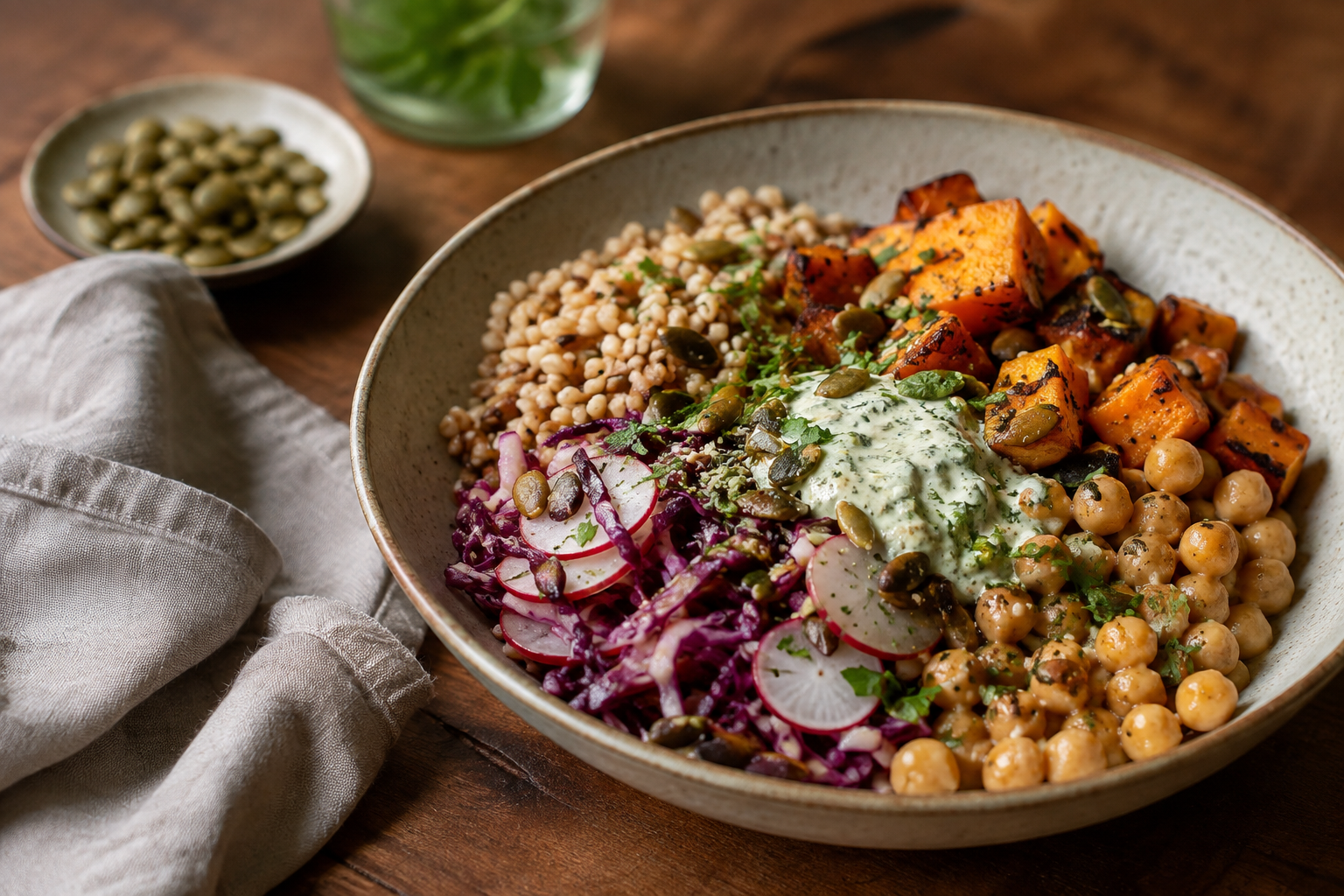
A plant-based meal can contain plenty of flavor and still feel strangely unfinished. The problem is often not the absence of meat, cheese, or a packaged substitute. It is the absence of contrast. A bowl of soft grains, tender beans, cooked vegetables, and creamy sauce may be nourishing, yet every bite arrives with the same resistance. The first spoonful tastes much like the last, so attention fades before the plate is empty.
The texture ladder is a simple way to prevent that sameness. It treats texture as a sequence of jobs: a substantial base gives the meal weight, a tender element makes it comfortable, something juicy or saucy carries flavor, a crisp element wakes up each bite, and a small finishing accent adds snap, chew, or creaminess. You do not need every possible texture. You need enough movement between them to make the meal feel intentional.
This method is not a recipe and does not depend on imitation meat. It is a reusable framework for weeknight bowls, salads, soups, sandwiches, trays, and quick plates. Once you learn to diagnose what a meal is missing, leftovers stop looking like unrelated containers and start looking like components.
Why texture changes the feeling of a meal
Flavor tells you what food tastes like. Texture tells you how the eating experience unfolds. A crisp edge creates anticipation before a creamy center. A chewy grain slows the bite enough for a sharp dressing to register. A juicy vegetable refreshes the palate after something roasted. These changes keep the mouth engaged without requiring a long ingredient list.
Texture also creates a sense of structure. When one element can be lifted with a fork, another can be scooped, and a third breaks with a little pressure, the plate feels composed rather than blended together. That structure is especially useful in plant-based cooking because many convenient staples, such as canned beans, cooked grains, and steamed vegetables, naturally lean tender.
The goal is not maximum crunch. A meal made entirely of raw, crisp ingredients can feel tiring and dry. Satisfaction comes from contrast and progression. Think of a ladder with neighboring rungs rather than a competition between hard and soft.
The five useful rungs
The ladder has five practical rungs. They can appear in any order on the plate, but each serves a different purpose.
- Foundation: a substantial element such as brown rice, barley, potatoes, flatbread, pasta, polenta, or a firm legume. It gives the meal shape and staying power.
- Tender body: roasted squash, braised greens, mushrooms, eggplant, lentils, or gently cooked beans. This is the comfortable middle of the meal.
- Moisture carrier: a dressing, salsa, broth, puree, stewed tomato, or juicy vegetable. It distributes seasoning and prevents dry bites.
- Fresh contrast: crisp cabbage, cucumber, radish, apple, celery, sprouts, or a bright herb mixture. It resets the palate.
- Finishing texture: toasted seeds, crushed nuts, crisp chickpeas, breadcrumbs, pickled vegetables, or a small spoonful of thick bean spread. It creates a memorable final signal.
Not every meal needs five separate ingredients. One ingredient can perform more than one job. A roasted potato has a crisp exterior and tender center. A chunky tomato salsa provides moisture, acidity, and fresh bite. Toasted lentils can act as both protein-rich body and crunchy finish.
Start with the texture you want to notice
When planning dinner, many people begin with a cuisine, a recipe name, or a protein. Try beginning with a physical experience instead. Do you want a spoonable, comforting meal with a crisp top? A chewy bowl with juicy bursts? A toasted sandwich with a creamy filling and sharp slaw? Naming the desired contrast makes ingredient decisions easier.
Choose one headline texture. It might be the charred edge of cabbage, the crackle of a toasted seed mixture, or the silkiness of white beans blended with lemon. Then build supporting textures around it. If the headline is crisp, include something soft and saucy. If the headline is creamy, include something chewy or fresh. This prevents the common mistake of adding several competing garnishes that make the plate busy without making it coherent.
Use a one-sentence meal brief
Before cooking, describe the meal in one tactile sentence: chewy grains with smoky vegetables, cool cucumber, and a crisp seed finish. That sentence acts like a design brief. If every component is soft, the missing rung is obvious. If the plate contains three dry items and no moisture carrier, you know what to fix before serving.
Build a dependable foundation
The foundation should hold its texture after it meets sauce. Cook grains until distinct rather than waterlogged, and let them rest uncovered briefly so steam can escape. Roast potatoes with enough space between pieces for their surfaces to dry and brown. Toast bread or flatbread shortly before serving instead of placing it under a wet filling too early.
Legumes can be a foundation when handled deliberately. Chickpeas and larger beans stay firmer when warmed gently and drained well. Lentils vary: some remain distinct, while others soften into a puree. Neither result is wrong, but the rest of the meal should respond to it. Distinct lentils pair well with creamy sauce; soft lentils benefit from a crisp topping and a sturdy vegetable.
A foundation does not have to dominate the plate. A small portion of chewy barley can give a vegetable-heavy salad more rhythm. Thick slices of roasted sweet potato can anchor a plate without any grain at all. The important question is whether there is something substantial enough to organize the other components.
Give tender ingredients defined edges
Tender foods become more interesting when their boundaries remain visible. Spread mushrooms across a wide pan so they brown instead of steaming into a soft pile. Roast cauliflower in pieces large enough to develop a browned side while keeping a moist center. Fold herbs into beans at the end rather than stirring until everything loses distinction.
Cut size matters. Tiny pieces cook quickly but often collapse into one texture. Mixed sizes can create natural variation: thin onion edges char while thicker centers stay sweet; small squash cubes caramelize while larger pieces remain plush. Keep sizes reasonably consistent for predictable cooking, then introduce contrast with a second method rather than relying on randomness.
When using a soft stew or curry, reserve one compatible ingredient for a separate finish. Roast a handful of the same chickpeas, toast a spoonful of coconut, or add ribbons of fresh greens just before serving. The meal still tastes unified because the ingredients belong together, but the surface gains definition.
Choose moisture that carries rather than floods
Sauce should connect components, not erase them. Begin with less than you think you need, toss thoroughly, and add more only where dry pockets remain. A thick sauce clings to roasted vegetables and grains; a thinner dressing works through leafy or shredded ingredients. Broth belongs in a bowl with clear depth, not as a puddle under food intended to stay crisp.
A balanced moisture carrier usually needs richness, acidity, seasoning, and enough water to move. Tahini, blended beans, nut butter, or olive oil can provide body. Lemon, vinegar, tomatoes, or pickled brine can brighten it. Salt and spices establish direction. Water adjusts texture without adding another dominant flavor.
Keep the sauce slightly more intense than you would eat alone because grains and vegetables soften its impact. Taste it on a piece of the foundation, not only from a spoon. The combination reveals whether the sauce is doing its actual job.
Create crispness with ordinary ingredients
Crisp contrast does not require deep frying or specialty products. Thinly sliced cabbage holds its snap under a light dressing. Radishes, carrots, cucumbers, and apples can be cut into matchsticks or coins. Breadcrumbs toasted in a pan with a little oil become a savory finishing layer. Seeds wake up when warmed until fragrant and allowed to cool.
Dry surfaces are essential. Pat rinsed beans before roasting. Let washed herbs and greens drain thoroughly. Avoid crowding roasting trays, because trapped steam softens edges. Add crisp elements at the last moment and store them separately from leftovers.
Acid can make raw vegetables feel crisper by sharpening their flavor, but time changes the result. A quick toss preserves snap. A longer rest creates a flexible, pickle-like texture. Decide which one the meal needs and dress accordingly.
Design a finishing jar
Keep one small jar of a versatile dry finish for hurried meals. Combine toasted seeds, coarse breadcrumbs, and a mild spice, or choose crushed nuts with sesame and a pinch of salt. Make only an amount you will use while it remains fragrant. Spoon it over soups, beans, roasted vegetables, or pasta after plating.
The jar is not meant to make every dinner taste the same. Change its character with the meal. Warm spices suit roasted roots, citrus zest brightens greens, and smoked seasoning complements beans. Its dependable function is texture; its flavor can rotate.
Use temperature as another form of contrast
Warm and cool components can make a simple plate feel vivid. Place warm roasted vegetables over room-temperature grains and finish with cool cucumber. Spoon hot lentils beside a crisp slaw instead of stirring the slaw into the pot. Add a cool, thick sauce to a warm flatbread just before eating.
Temperature contrast works best when it is intentional and safe to serve immediately. Do not let cooked food sit merely to create variation. Prepare the cool component first, keep it chilled, and bring it out when the warm part is ready. For leftovers, reheat only the components designed to be warm.
A practical assembly sequence
The ladder becomes easiest when cooking is organized around what holds and what fades. Start with the component that takes longest and survives waiting, usually a grain, potato, or roasted vegetable. While it cooks, make the sauce and cut the fresh contrast. Prepare the crisp finish last or keep a ready-made version in a sealed jar.
- Name the headline texture. Decide what you want the diner to notice first.
- Choose the foundation. Select one substantial item that supports the meal.
- Add tender body. Cook one or two vegetables or legumes with defined shape.
- Mix the moisture carrier. Adjust it against the foundation.
- Prepare fresh contrast. Cut and season it close to serving.
- Finish after plating. Add crisp or creamy accents where they will remain distinct.
Plate in layers only when layers protect texture. Sauce can go under roasted vegetables so their tops remain crisp. Slaw belongs beside a warm filling if mixing would wilt it. A garnish scattered across the whole plate gives more frequent contrast than a mound in one corner.
Diagnose a meal before adding more flavor
When a dish feels dull, pause before reaching for extra salt or spice. Take a bite and describe its physical character. Is everything soft? Is every component dry? Does the meal require too much chewing without relief? Does a watery sauce make once-crisp ingredients limp? The answer points to a texture fix.
- Too soft: add toasted seeds, crisp vegetables, or browned crumbs.
- Too dry: add a clinging sauce, juicy relish, or a spoonful of seasoned broth.
- Too crunchy: introduce creamy beans, mashed vegetables, or a tender grain.
- Too uniform: separate one component and season it differently.
- Too heavy: add a cool, acidic, water-rich vegetable.
This diagnostic habit reduces random additions. Hot sauce may increase intensity, but it will not make a soft bowl feel varied. More oil may add richness, but it will not rescue a meal that needs freshness.
Plan leftovers by texture lifespan
Some textures improve overnight; others disappear. Braised beans, cooked grains, and thick sauces usually hold well when stored separately. Toasted toppings, dressed greens, and cut watery vegetables are more fragile. Pack the meal according to those differences rather than compressing everything into one container.
For a planned second meal, deliberately transform one component. Crisp yesterday’s grains in a pan, mash leftover beans into a spread, or roast cooked potatoes until their edges firm. Add one fresh element and a new finish. Transformation makes leftovers feel designed while avoiding the waste of rebuilding dinner from scratch.
Labeling is unnecessary when the containers are visible and the plan is simple. Group components together in the refrigerator so the sauce and finish are not forgotten. The best system is the one that makes assembly easier than starting over.
Practice with three flexible meal patterns
A warm bowl can use chewy rice, tender beans, roasted peppers, a thick herb sauce, shredded cabbage, and toasted seeds. A soup can pair a smooth vegetable base with whole lentils, wilted greens, and crisp crumbs added at the table. A sandwich can combine toasted bread, mashed chickpeas, juicy tomato, firm cucumber, and a sharp slaw.
Notice that these are patterns rather than fixed recipes. Substitute according to season, preference, and what is already available. Preserve the jobs even when the ingredients change. If cucumber is unavailable, another crisp, water-rich vegetable can take its place. If nuts are unsuitable, seeds or seasoned breadcrumbs can provide the finish.
Let texture make plant-based cooking feel abundant
Cooking without imitation meat does not mean trying to disguise vegetables or asking beans to behave like something else. It means allowing plant ingredients to contribute their own range: the chew of a grain, the creaminess of a puree, the snap of cabbage, the juiciness of tomato, the crisp edge of a roasted chickpea, and the tenderness of an eggplant center.
The texture ladder turns that range into a repeatable decision process. Establish a foundation, protect tender shapes, connect them with measured moisture, add fresh contrast, and finish at the last moment. When a meal feels incomplete, identify the missing rung instead of adding ingredients without a purpose.
With practice, the method becomes almost automatic. You stop asking which substitute a plant-based plate requires and start asking what the next bite needs. That small change produces meals that are satisfying because of what they are: layered, varied, practical, and built from ordinary foods treated with attention.