
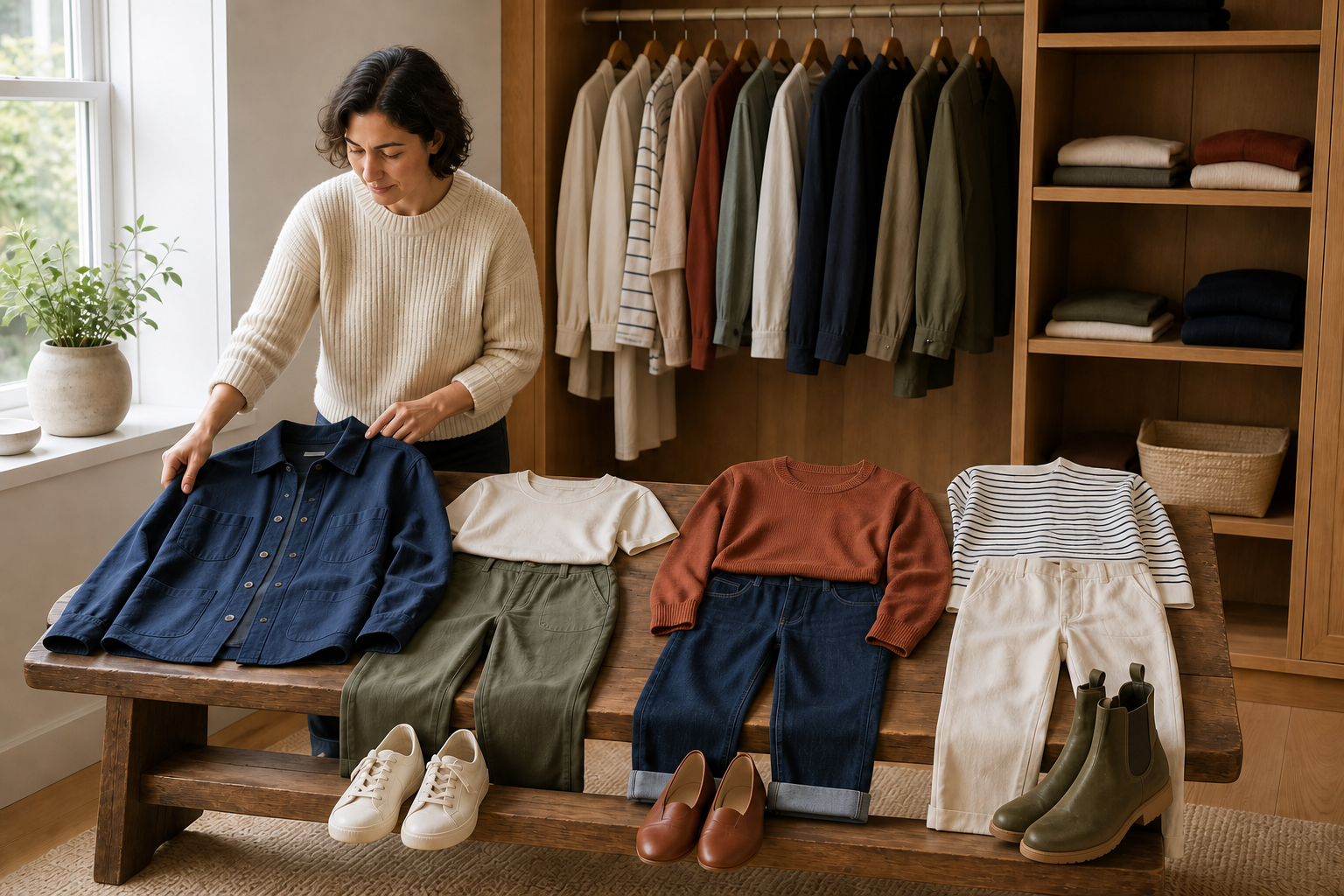
A wardrobe can be full and still make an ordinary morning feel strangely difficult. The problem is often not a shortage of garments. It is that every piece must be reconsidered from the beginning: what works with it, whether the proportions feel right, which shoes survive the day, what the weather will do and whether the entire combination is clean.
The outfit formula method reduces that repeated decision. A formula describes a relationship between clothing roles, such as a close-fitting base, a relaxed lower half, a structured layer and a practical shoe. The specific pieces can change while the relationship remains familiar.
This is not a rule that everyone should dress alike, own fewer clothes or ignore fashion. It is a way to understand why certain combinations repeatedly work for one person’s body, taste, schedule and environment. Trends can enter when they add pleasure; they no longer have to rebuild the wardrobe from zero.
A formula is not a uniform
A uniform repeats nearly the same items for consistency. A formula repeats the logic connecting items. “White shirt plus black trousers” names two pieces. “Light base plus uninterrupted dark lower line plus one structured layer” describes a relationship that could be expressed through many colors, fabrics and levels of formality.
A useful formula has boundaries without becoming brittle. It says enough to make coordination easier but leaves space for mood, culture, climate and occasion. If every detail is fixed, it becomes a costume. If nothing is fixed, it offers no help.
Write formulas in plain language rather than fashion jargon. The words only need to remind you what creates balance and comfort. “Soft column, short outer layer, grounded shoe” may be more useful than a list of trend categories.
Start with the week you actually live
Before opening a shopping page, list the situations that occupied the last two ordinary weeks. Include commuting, desk work, physical tasks, caregiving, worship, social time, exercise transitions, formal obligations and time at home. Mark indoor and outdoor movement, expected weather, carrying needs and any dress requirements.
Count repeated situations, not imagined identities. Someone may love dramatic evening clothes yet spend most weekdays moving between a warm train and a cold office. The wardrobe can honor both, but formulas should solve the situations that recur.
Add sensory and accessibility needs. Seams, closures, compression, fabric texture, footwear stability and ease of dressing can determine whether an outfit is genuinely usable. Religious and cultural requirements are not decorative additions; they belong inside the formula from the beginning.
Find anchors in what already gets worn
An anchor is a recurring silhouette or garment role that makes several outfits easier. It might be a straight trouser, long fluid layer, fitted knit, overshirt, full skirt, simple dress or practical shoe shape. Begin with pieces that already survive real days, not items admired but rarely chosen.
Lay out three recent outfits that felt comfortable and recognizable. Ask what relationship they share. Perhaps the upper half is compact while the lower half has movement. Perhaps the base is one color and an outer layer creates contrast. Perhaps every successful outfit includes a visible waist, a long vertical line or a substantial shoe.
The anchor is not automatically the most noticeable piece. It is the piece or shape that quietly gives the rest somewhere to go. A dependable pair of trousers may support far more variation than a memorable jacket.
Write the formula as functional roles
A flexible formula can include four roles:
- Base: the garment or set of garments that establishes coverage, comfort and the main silhouette.
- Structure: the element that creates an edge, line, volume change or degree of formality.
- Movement: the piece whose drape, stretch or shape lets the body perform the day’s work.
- Finish: footwear, accessory, hair covering or other element that completes function and visual intention.
Not every outfit needs four separate objects. A dress can provide base, structure and movement at once. A culturally specific garment may have its own complete logic. The roles are prompts for observation, not instructions for dividing an outfit into Western clothing categories.
Write two or three formulas, each tied to a recurring situation. More formulas can come later. Beginning with ten recreates the original decision problem.
Test fit through movement, not a frozen pose
An outfit can look resolved in a mirror and fail within an hour. Sit, reach, bend, walk at normal speed and carry the bag or equipment the day requires. Notice whether hems catch, waistbands roll, layers pull against each other, closures open or shoes change posture.
Fit should describe the garment’s relationship to the wearer, not grade the body. If a jacket restricts reach, the jacket is not serving that task. If trousers require constant adjustment, the friction belongs in the clothing system rather than in a judgment about discipline or shape.
Record the exact problem. “Feels wrong” is difficult to solve. “Outer layer grips the knit sleeves,” “hem meets the boot at an awkward point” or “pockets cannot hold the items I carry” suggests an alteration, substitution or different formula.
Use proportion as a set of visual breaks
Proportion is the relationship among lengths, widths and visible divisions. There is no universally flattering proportion. The useful question is where an outfit changes direction and whether those changes create the effect the wearer wants.
Look at the top and bottom volumes together. A broad upper layer with a broad lower shape may feel intentionally expansive, while a more fitted base can sharpen the contrast. A long outer line can unify several shorter layers. Tucking, cuffing or opening a layer changes the visual break without buying anything.
Photograph a formula from a neutral angle if that helps evaluation, but do not let a single still image overrule comfort in motion. Cameras, mirrors and lighting distort in different ways. The best proportion is one the wearer can inhabit rather than continuously arrange.
Build color relationships instead of rigid palettes
A formula may work through low contrast, one repeated color, a dark-light-dark rhythm, neighboring colors or a single concentrated accent. Describe the relationship before naming exact shades. That allows substitutions when laundry, season or mood changes.
Begin with colors already near the face and body that the wearer enjoys. Then inspect whether the formula needs continuity or separation. Repeating a color in footwear or an outer layer can connect the outfit. Keeping an accent in one place can make it feel deliberate.
Personal coloring systems can be enjoyable, but they are optional lenses, not biological laws. Skin tone, hair, contrast preference, cultural meaning and simple delight all shape color choices. A color does not have to make someone appear smaller, younger or more conventional to earn a place.
Let texture carry variation
When silhouettes repeat, texture keeps them from feeling identical. Smooth cotton, brushed knit, crisp poplin, washed denim, matte wool, linen, leather alternatives and technical fabrics handle light and movement differently. Two monochrome outfits can communicate entirely different moods through surface alone.
Texture also changes friction, warmth and care. A coarse layer may irritate uncovered skin. A silky base may slide beneath a jacket beautifully but require a care routine that does not fit the week. A heavy fabric may hold structure while making a commute uncomfortable.
Use texture as both a visual and practical variable. The best variation is not the most decorative one; it is the one that stays wearable through the whole situation.
Design for climate transitions
Weather rarely remains one simple temperature. A useful formula may need to move from cool morning to warm afternoon, rain to heated room, or bright sun to strong indoor air conditioning. Build a layer sequence that can be removed, carried and restored without collapsing the outfit.
Consider breathability, wind, drying time and protection appropriate to the conditions. A layer that looks versatile but cannot fit in the usual bag may not be versatile in practice. Head coverings, sun protection and weatherproof footwear can be central formula roles rather than afterthoughts.
Seasonal formulas can share a silhouette while changing material weight. That preserves familiarity without pretending one fabric performs all year.
Treat footwear as an operating constraint
Shoes affect pace, balance, hem length, weather tolerance and how much a person is willing to move. Choose the functional footwear range before finalizing the formula. If a day includes prolonged standing, cycling or uneven surfaces, styling around an unsuitable shoe creates an outfit that exists mainly for arrival photographs.
Test trouser and skirt lengths with the actual shoes. A formula that works with only one heel height or sole thickness may be useful, but it is less flexible than it first appears. Insoles, orthoses, braces and adaptive footwear should be accommodated without apology.
Make laundry part of the design
A formula fails when all of its bases require washing on the same day. Note wear frequency, drying time, stain exposure, ironing or steaming needs and specialist care. Follow each garment’s care information and material requirements rather than assuming similar-looking fabrics behave alike.
Build redundancy at the role level. Two bases do not have to be duplicates; they only need to perform the same function in the formula. A washable knit and a simple woven shirt might both provide the compact upper layer a silhouette needs.
Care capacity changes with housing, disability, travel, caregiving and access to equipment. A wardrobe plan should fit the person’s real maintenance resources, not create a second job.
Create a small wardrobe matrix
Place formulas down one side of a page and recurring situations across the top. In each intersection, list one combination already owned. Empty cells reveal a specific problem: perhaps the relaxed formula has no rain option, or the work formula cannot handle a walking commute.
Do not fill every empty cell with a purchase. First test whether a layer can cross formulas, a hem can be altered, a different color relationship can connect existing pieces or an occasion is too rare to deserve permanent wardrobe space. Borrowing or renting may suit infrequent needs where available and appropriate.
The matrix is successful when it reduces uncertainty, not when every square contains a unique outfit.
Vary one element at a time
To learn what makes a formula work, change one role while holding the others steady. Replace the structured layer but keep the base, movement and finish. Then try a different shoe. This reveals which variations preserve the formula and which create a new one.
Accessories can shift emphasis, but they should not be required to rescue a combination that feels physically wrong. Likewise, a statement piece is easier to integrate when its role is clear: it supplies structure, color concentration, texture or cultural meaning rather than merely “interest.”
Run an ordinary-week wear test
Choose three formulas and use them across a normal week. After each wear, note preparation time, physical comfort, temperature changes, maintenance, compliments only if meaningful to you, and whether the outfit felt like your intended self. Avoid reducing the review to attractiveness.
Tag friction as fit, function, coordination, care or context. A coordination problem may be solved inside the formula. A context problem means the formula was used for the wrong situation. Repeated fit or sensory friction may call for alteration or release.
One week cannot test every season, but it can expose imagined versatility. A garment that works only when the wearer remains still is no longer counted as an all-day anchor.
Buy only for a named gap
If a gap remains, write its job before shopping: “washable midweight layer that fits over both bases, works with flat shoes and can be carried in my usual bag.” Evaluate candidates against that sentence. A beautiful item that does not fill the role can still be enjoyed, but it should not be mistaken for the solution.
Consider alteration, repair, secondhand availability and pieces already serving another formula. When buying new, inspect construction, care, comfort and likely frequency rather than relying on a sustainability adjective or trend forecast.
Keep trends in a supporting role
A trend can refresh a formula through color, proportion, fabric or one finishing detail. Because the underlying relationship is stable, the wearer can test the new element against clothing already owned. If it integrates, it becomes a variation. If it requires several supporting purchases, its real cost and complexity are clearer.
Personal style is not proved by refusing every trend, nor by adopting each one quickly. It develops through repeated choices, attention to experience and permission to change. Formulas simply preserve what has already been learned.
The result is not a perfect capsule or a permanently finished wardrobe. It is a set of reliable starting points. On an ordinary morning, the wearer chooses a formula, adjusts one or two variables and leaves with clothing that can participate in the day instead of demanding constant management.