
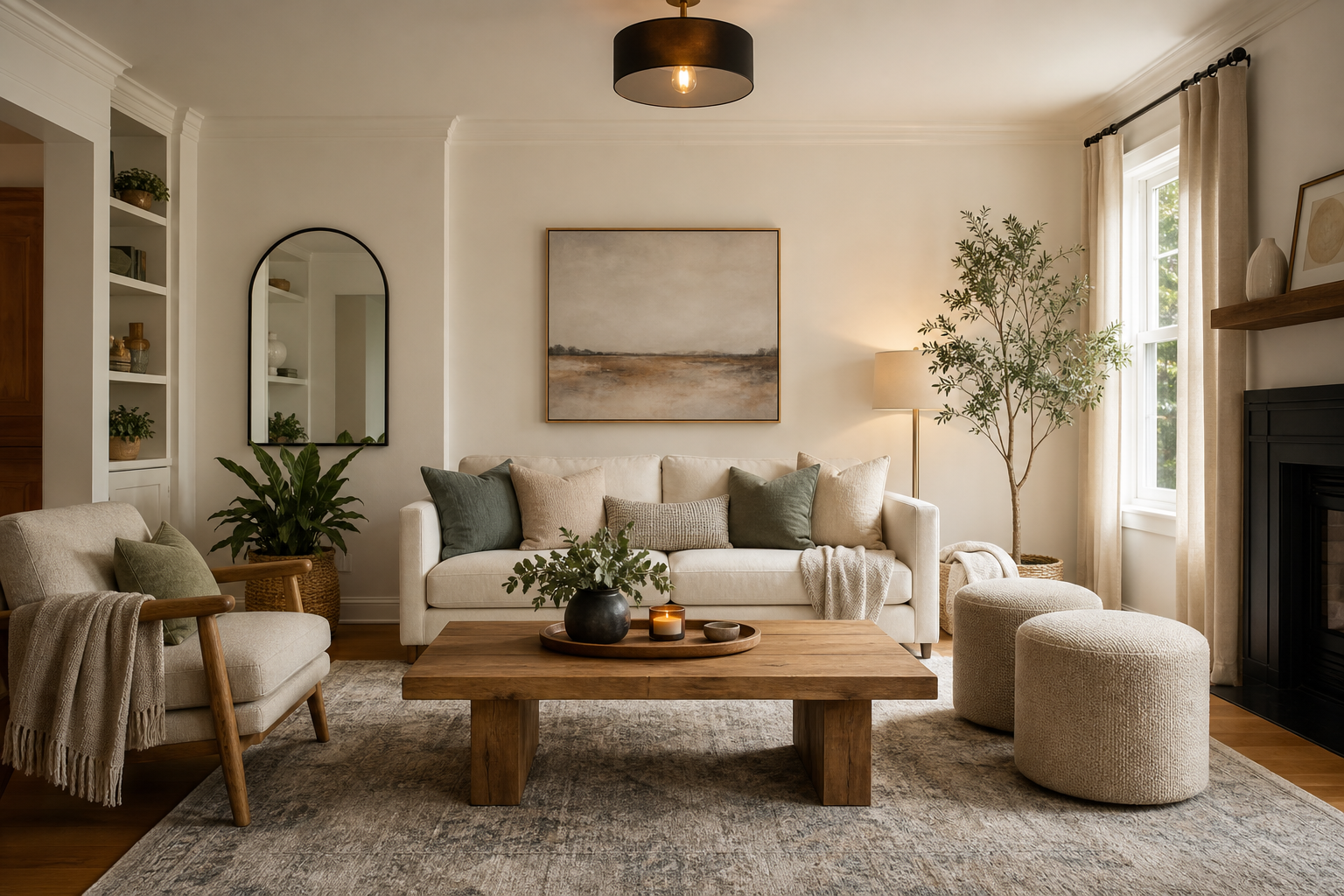
Make Your Home Feel New Without Overspending
Budget home upgrades are less about buying everything at once and more about making thoughtful changes where they matter most. A fresh coat of paint, improved lighting, better organization, or updated hardware can dramatically change how a room looks and works. The best low-cost projects solve a daily annoyance, improve visual appeal, or make your home easier to maintain.
Before shopping, walk through each room with a notepad. Identify what feels worn, inconvenient, dark, cluttered, or unfinished. Then prioritize projects that offer a strong return in comfort and appearance. This approach prevents impulse purchases and helps you use a limited budget on improvements you will notice every day.
Refresh Walls, Trim, and Front Doors With Paint
Paint remains one of the most affordable ways to transform a home. Neutral wall colors can make small rooms feel brighter and larger, while an accent wall adds character without requiring several gallons of paint. If your walls are still in good condition, consider painting only high-impact areas such as the entryway, bathroom, kitchen, or a single wall behind the bed.
Do not overlook trim, baseboards, doors, and cabinets. Fresh white trim creates clean contrast and can make an older room look well cared for. Painting an interior door in charcoal, deep blue, or muted green can create a custom look at a fraction of the price of replacement. For curb appeal, repainting the front door is a particularly effective weekend project.
- Clean surfaces thoroughly before painting.
- Patch nail holes and sand rough spots for a smoother finish.
- Use sample pots to test colors in morning and evening light.
- Choose durable, moisture-resistant paint for kitchens and bathrooms.
Upgrade Lighting for Instant Atmosphere
Lighting affects both function and mood, yet it is often neglected in budget improvement plans. Start by replacing outdated bulbs with warm-white LED bulbs. LEDs use less energy, last longer, and are available in brightness levels suitable for every space. A warm temperature around 2700K generally creates a comfortable, inviting feel in living rooms and bedrooms.
Next, layer your lighting. Instead of relying on one ceiling fixture, add a floor lamp beside seating, a small table lamp on a console, or under-cabinet lighting in the kitchen. Plug-in sconces are another affordable option for reading corners or bedside lighting, especially when hardwired electrical work is not practical. Replacing an old pendant light or flush-mount fixture can also become a focal point without a full room remodel.
Modernize Kitchens and Bathrooms With Hardware
Cabinet pulls, knobs, faucets, towel bars, and switch plates are small details with outsized influence. Replacing mismatched or dated hardware can give kitchens and bathrooms a coordinated, more current appearance. Brushed nickel, matte black, brass, and aged bronze finishes are widely available at different price points, so it is easy to find an option that suits your style.
Measure existing cabinet handle holes before purchasing replacements. Choosing pulls with the same center-to-center measurement avoids filling and drilling new holes. In bathrooms, a new shower curtain, matching towels, a framed mirror, and upgraded vanity hardware can create a complete refresh for far less than replacing the vanity itself.
Create Order With Affordable Storage Solutions
Clutter can make even a recently decorated room feel unfinished. Improving storage is one of the most practical budget home upgrades because it changes how a space functions every day. Begin by decluttering items that are broken, duplicated, or no longer useful. Then assign a dedicated home to the items you keep.
Use clear containers for pantry staples, labeled bins for cleaning supplies, drawer dividers for utensils, and baskets for blankets or toys. In closets, matching hangers and shelf bins create a cleaner visual effect while maximizing available space. Vertical storage is especially valuable in compact homes: wall hooks, over-the-door organizers, floating shelves, and pegboards free up floors and counters.
High-Value Organization Projects
- Add hooks near the entry for coats, bags, and keys.
- Install a simple shelf above the washer for laundry essentials.
- Use pullout bins or turntables in deep kitchen cabinets.
- Organize a bathroom drawer with inexpensive modular trays.
- Create a charging station to keep cables off countertops.
Add Texture Through Textiles and Simple Decor
Soft furnishings can make a home feel intentional and comfortable without requiring construction work. Focus on a few substantial pieces rather than lots of small accessories. An area rug can define a seating area, soften hard floors, and introduce color or pattern. New cushion covers, curtains, bedding, and throws can refresh a room seasonally at a modest cost.
When choosing curtains, hang the rod higher and wider than the window frame whenever possible. This simple trick makes windows appear larger and ceilings seem taller. For art, consider printable pieces in inexpensive frames, a gallery wall of family photographs, or a large mirror positioned to reflect natural light. Plants, whether real or convincing faux varieties, add life and softness to bare corners.
Improve Efficiency and Prevent Expensive Repairs
Some of the smartest home improvements are not immediately decorative. Weatherstripping around doors and windows can reduce drafts and improve comfort. Replacing worn caulk around tubs, sinks, and backsplashes helps prevent water damage. Installing a programmable thermostat, insulating hot-water pipes, or fitting low-flow showerheads can lower utility use over time.
Also inspect smoke detectors, carbon monoxide detectors, exterior lighting, and door locks. These upgrades may not be glamorous, but they improve safety and protect the value of your home. Set aside part of your budget for basic maintenance before spending on purely cosmetic changes.
Plan for a Polished Result
A successful budget upgrade plan combines patience, priorities, and a clear vision. Choose one or two projects per month, watch for sales, compare prices, and consider secondhand sources for furniture, mirrors, and decor. Spend more on items that receive heavy daily use, such as faucets, lighting, and storage systems, while saving on trend-based accessories that are easy to change later.
Small improvements add up. By refreshing finishes, improving organization, updating lighting, and maintaining essential systems, you can create a home that looks more expensive, works better, and feels distinctly your own without taking on a major renovation.