
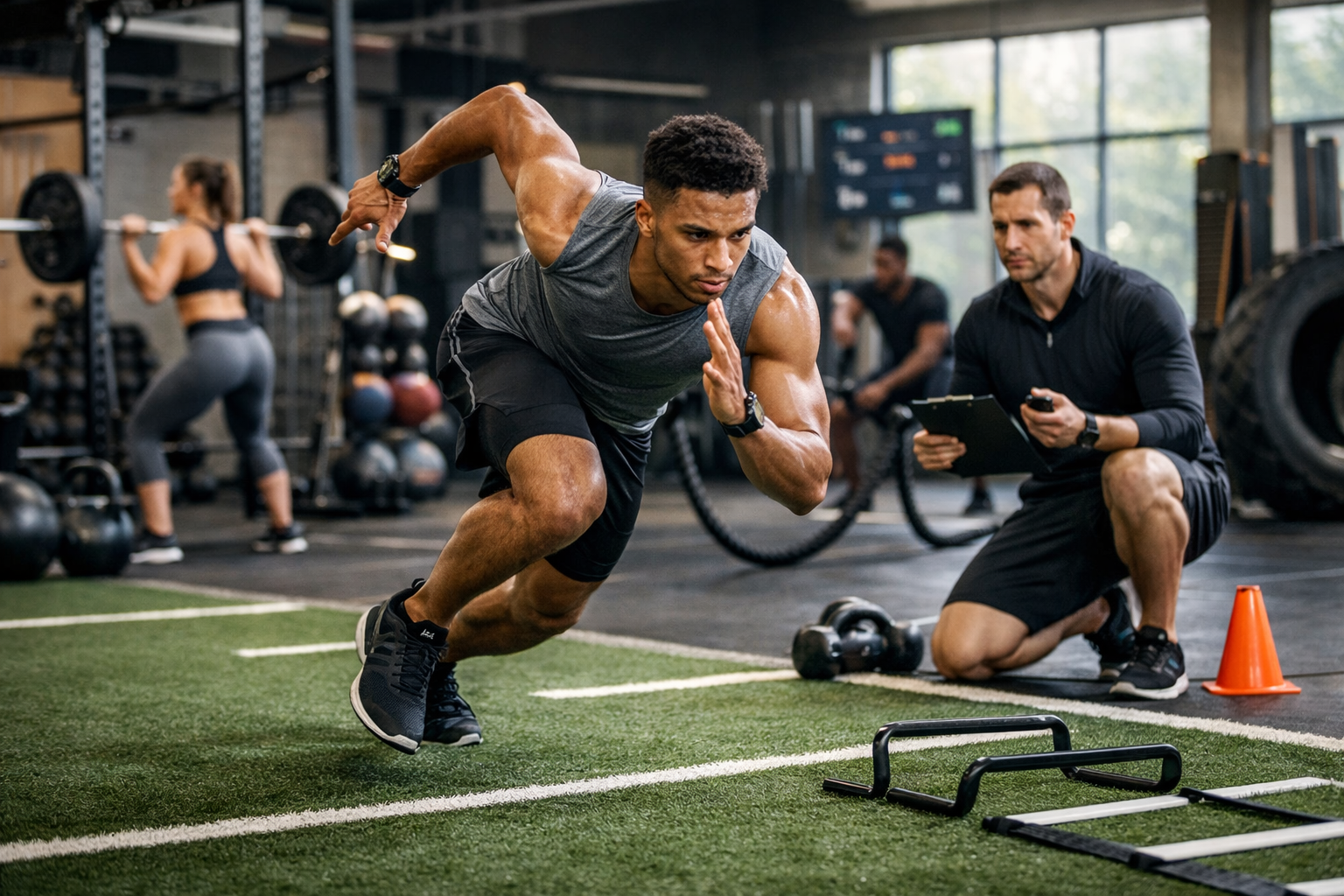
Understanding Training and Conditioning in Sports
Training and conditioning are essential components of athletic development. While skill practice teaches an athlete how to perform the technical demands of a sport, conditioning prepares the body to handle those demands efficiently and consistently. Together, they shape a stronger, faster, more durable athlete.
In every sport, physical readiness affects performance. A soccer player needs aerobic endurance and agility, a basketball player depends on explosive power and coordination, and a swimmer requires muscular endurance and refined movement efficiency. Effective training and conditioning programs are designed to match these sport-specific needs rather than applying the same routine to everyone.
The Core Elements of Athletic Conditioning
A complete conditioning program focuses on several physical qualities. Improving just one area may help temporarily, but long-term athletic progress usually comes from balanced development.
Strength
Strength is the ability to produce force. It supports nearly every movement in sports, from sprinting and jumping to tackling and changing direction. Resistance training with free weights, machines, bands, or bodyweight exercises can increase overall strength and joint stability.
Power
Power combines strength and speed. It allows athletes to explode off the line, leap for a rebound, or throw with force. Plyometric drills, Olympic lift variations, medicine ball throws, and sprint work are common tools for improving power.
Speed and Agility
Speed refers to how quickly an athlete can move in a straight line, while agility involves rapid changes in direction under control. Both are vital in dynamic sports. Proper sprint mechanics, footwork drills, reaction training, and mobility work all contribute to better movement efficiency.
Endurance
Endurance enables athletes to sustain effort over time. Depending on the sport, this may mean aerobic endurance for long-duration activity or anaerobic endurance for repeated bursts of high intensity. Interval running, circuit training, tempo sessions, and sport-specific conditioning drills can improve stamina.
Mobility and Flexibility
Mobility is the ability to move joints through a full range of motion with control, while flexibility refers to the length of muscles and connective tissue. These qualities help athletes move efficiently, maintain proper technique, and lower stress on the body during training and competition.
Why Sport-Specific Training Matters
One of the most important principles in conditioning is specificity. This means the training program should reflect the movement patterns, energy systems, and physical demands of the sport. A distance runner and a wrestler may both be highly conditioned, but their training methods should be very different.
Sport-specific training does not mean every session must mimic game play. Instead, it means building physical qualities that directly support performance. For example, a tennis player may train rotational power, lateral movement, and shoulder stability, while a volleyball athlete may focus on vertical jump development, landing mechanics, and repeated sprint ability.
The Role of Progressive Overload
To improve, the body must be challenged gradually over time. This principle is called progressive overload. Athletes adapt when training stress is increased in a planned and manageable way, such as by adding weight, increasing volume, improving intensity, or reducing rest periods.
However, more is not always better. Sudden spikes in workload can lead to fatigue, poor technique, and injury. Successful conditioning programs balance hard work with proper recovery, allowing the body to adapt and grow stronger.
Recovery: The Often Overlooked Performance Tool
Recovery is not a break from training; it is part of training. Muscles repair, energy stores replenish, and the nervous system resets during recovery periods. Without enough rest, even the best-designed program can fail to deliver results.
Key recovery strategies include quality sleep, hydration, sound nutrition, active recovery sessions, and scheduled rest days. Stretching, foam rolling, light movement, and breathing exercises may also help athletes manage soreness and maintain readiness.
- Sleep 7 to 9 hours consistently for physical and mental restoration.
- Eat balanced meals with adequate protein, carbohydrates, and healthy fats.
- Hydrate before, during, and after training.
- Use rest days and lighter sessions to prevent overtraining.
- Monitor fatigue, mood, and performance for early warning signs of burnout.
Injury Prevention Through Smart Conditioning
Conditioning is not only about maximizing output; it also plays a major role in keeping athletes healthy. Weak stabilizing muscles, poor movement mechanics, and inadequate mobility can increase injury risk. A well-rounded program addresses these issues before they become major problems.
Warm-ups are especially important. A dynamic warm-up raises body temperature, activates key muscle groups, and prepares joints for movement. Injury prevention work may include core stability exercises, single-leg balance drills, posterior chain strengthening, and controlled landing practice.
Structuring an Effective Training Week
A productive training schedule depends on age, experience, sport season, and individual goals. During the off-season, athletes often focus on building strength, correcting weaknesses, and developing fitness. In-season programs usually prioritize performance maintenance, recovery, and injury prevention.
A basic weekly structure might include a combination of strength sessions, conditioning work, mobility training, skill practice, and rest. The exact balance should reflect the athlete’s competition calendar and recovery capacity.
Sample Priorities in a Balanced Program
- 2 to 4 strength and power sessions per week
- 1 to 3 sport-specific conditioning sessions
- Daily mobility or movement preparation work
- Technical skill practice based on sport demands
- At least 1 full recovery day each week
Mental Conditioning and Performance Readiness
Physical training is only one side of athletic preparation. Mental conditioning helps athletes stay focused, confident, and composed under pressure. Visualization, goal setting, breathing control, and pre-performance routines can improve consistency and decision-making.
Strong mental habits also support long-term development. Athletes who embrace discipline, patience, and resilience often progress more steadily than those who rely only on motivation. The best conditioning plans build both body and mindset.
Conclusion
Training and conditioning are central to success in sports because they prepare athletes to meet the physical and mental demands of competition. A thoughtful program improves strength, speed, endurance, and mobility while supporting recovery and reducing injury risk.
Whether an athlete is a beginner or experienced competitor, the most effective approach is structured, progressive, and specific to the sport. When training is combined with proper recovery and consistent effort, conditioning becomes a powerful tool for performance, health, and long-term athletic growth.