
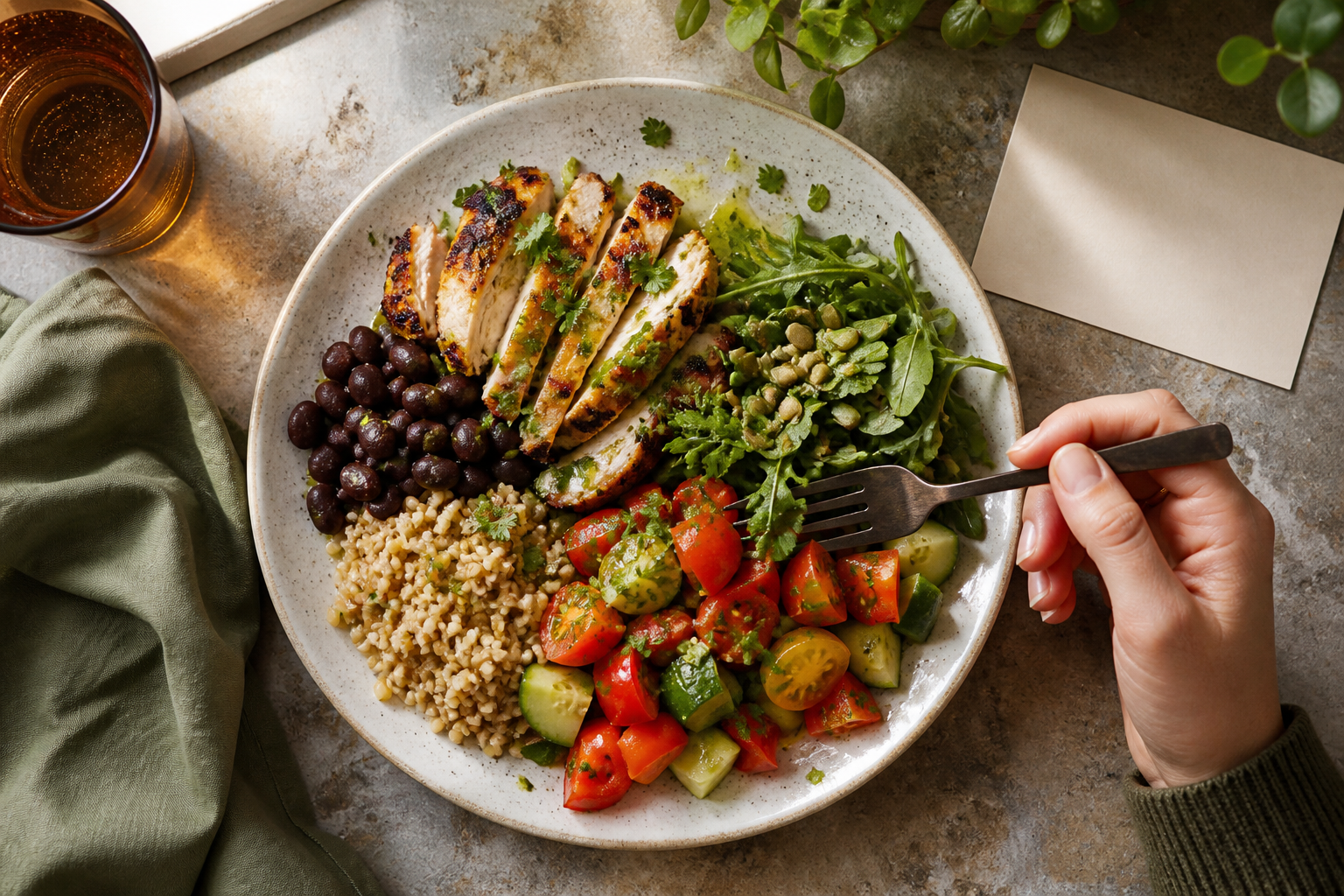
A meal can check every box on a planning list and still feel strangely unfinished. Perhaps lunch was a neat salad that left you searching for crackers at three o’clock. Perhaps dinner was filling in sheer size but never became satisfying, so the evening turned into a tour of sweet, salty and crunchy snacks. The problem is not necessarily a lack of discipline. “Enough food” and “a satisfying eating experience” are related, but they are not identical.
A useful meal has to do several jobs at once. It should provide nourishment, fit the day, taste appealing, respect budget and culture, and leave the eater comfortably ready to move on. No single ingredient can guarantee that result. Satisfaction emerges from the combination of food composition, sensory variety, pace, setting and individual response.
The Satisfaction Stack is a practical way to build that combination without turning lunch into a mathematics exercise. Its layers are protein, fiber-rich foods, water-rich volume, texture, fat and flavor, followed by enough time and attention to notice the meal. It is not a weight-loss formula, a promise to eliminate hunger or a substitute for medical nutrition care. It is a flexible design tool: assemble the layers, eat, observe and adjust.
First, define satisfaction more carefully
People often use “full” and “satisfied” as if they mean the same thing. Fullness is a physical sensation. Satisfaction also includes whether the meal delivered the flavors, temperatures and textures you wanted; whether it felt substantial enough for the hours ahead; and whether you were present enough to register it.
This distinction explains why a very bulky plate can feel disappointing and why a smaller but well-composed meal can feel complete. It also prevents a common mistake: endlessly adding low-energy bulk while leaving out the ingredients that make the meal enjoyable. The aim is comfortable sufficiency, not maximum stomach volume.
Appetite also varies normally. Sleep, activity, stress, weather, medication, illness, menstrual cycles, meal timing and many other factors can change how much food feels right. The same breakfast will not perform identically every day. A sound framework therefore leaves room for seconds, smaller portions and changing needs.
Layer one: choose a recognizable protein anchor
Begin by naming the meal’s protein-rich food. That might be eggs, yogurt, fish, chicken, tofu, tempeh, lentils, beans, paneer, cottage cheese or another food that fits your preferences. “Recognizable” matters because a token scattering of chickpeas or a thin swipe of yogurt can make a meal look complete without functioning as a real anchor.
You do not need to calculate grams for this exercise. Ask a more practical question: if someone looked at the plate, could they identify the main protein food without an explanation? If not, consider making that ingredient more substantial or combining two modest sources, such as lentils with yogurt, beans with cheese, or whole grains with tofu.
Protein choices need not revolve around meat, and variety is useful. Beans, peas, lentils, nuts, seeds and soy foods can contribute protein alongside fiber and other nutrients. Eggs, dairy foods, seafood, poultry and meat offer different cooking qualities and nutrient profiles. Rotate according to preference, access and any guidance that applies to you.
The anchor should suit the format. A bowl could start with lentils; a sandwich with egg, tuna, chicken, hummus or baked tofu; a snack with yogurt, milk, soy milk, nuts or roasted chickpeas. If breakfast rarely lasts until the next planned meal, look at the anchor before assuming breakfast itself “does not work” for you.
Layer two: add fiber-rich structure
Next, include foods that bring fiber and substance: vegetables, fruit, beans, peas, lentils, whole grains, nuts or seeds. Fiber-rich foods are not a decorative side quest. They create the body of many satisfying meals and can add chew, color and complexity.
Some ingredients serve more than one role. Lentils can be both the protein anchor and fiber-rich structure. A bean-and-vegetable chili may cover protein, fiber and water-rich volume in one pot. Oats topped with yogurt, pear and walnuts create overlapping layers rather than tidy compartments. The stack is a checklist for functions, not a rule that every function requires a separate food.
If your current diet is low in fiber, increase it gradually and drink fluids according to your needs. A dramatic overnight change can be uncomfortable for some people. People with gastrointestinal conditions or prescribed dietary restrictions may need individualized advice rather than a generic “more is better” message.
Layer three: use water-rich volume wisely
Soups, stews, fruit and many vegetables carry substantial water. They can make a plate or bowl feel generous and add variety without requiring elaborate preparation. Tomatoes, cucumber, leafy greens, mushrooms, courgette, citrus, melon, berries and broth-based dishes are familiar examples, but the best choices are the ones you actually enjoy and can obtain.
Volume is most helpful when it supports the meal instead of replacing its foundation. A large pile of plain leaves beside a few bites of protein may create impressive plate coverage but little pleasure. Dress the vegetables, season the soup and retain the protein and fiber-rich structure. A satisfying meal is allowed to be delicious.
Remember that not everyone wants or tolerates a high-volume meal. A person with a small appetite may do better with a more compact combination, such as yogurt with oats, fruit and nut butter, than with an enormous salad. The principle is to choose an amount and format that feel comfortable, not to compete for the largest plate.
Layer four: design texture rather than accepting monotony
Texture is often the missing layer. A meal in which everything is soft, blended or uniformly chewy can be nourishing yet fail to hold attention. Contrast gives the senses something to notice: crisp with creamy, juicy with toasted, tender with crunchy, warm with cool.
Texture does not require deep frying or a cupboard of specialty toppings. Add toasted seeds to soup, sliced cucumber to a soft wrap, cabbage to a rice bowl, nuts to oats, crisp apple to yogurt, roasted chickpeas to a salad or browned edges to cooked vegetables. Even the way ingredients are cut changes the experience. Shredded carrots and roasted carrot wedges do not eat like the same food.
Use texture intentionally rather than adding crunch automatically. If the main dish is already crisp and dry, a creamy sauce or juicy fruit may provide the contrast. If chewing is difficult, contrast can come from temperature, aroma and gentle textures rather than hard foods.
Layer five: include enough fat to carry flavor
Fat contributes flavor, mouthfeel and culinary cohesion. It may be built into the protein food, used in cooking or added as avocado, nuts, seeds, olives, cheese, tahini, pesto or dressing. Removing it reflexively can leave vegetables harsh, grains dry and the entire meal feeling provisional.
This is not an instruction to pour freely without regard to preference or health needs. It is an invitation to ask whether the meal has a deliberate source of richness. A spoonful of dressing can connect a grain bowl; toasted sesame oil can finish noodles; yogurt can soften a spicy dish. Choose types and amounts that fit your broader eating pattern and any professional guidance you follow.
Layer six: make the desired flavor easy to name
A plate can contain protein, produce and whole grains yet miss the flavor you were actually seeking. Before cooking, complete the sentence: “I want this meal to be…” Perhaps the answer is bright and herby, smoky and warm, tangy and crunchy, gently spiced, savory and comforting, or cool and fresh.
Then build toward that description with acid, herbs, spices, aromatics, condiments and temperature. Lemon, vinegar, ginger, garlic, chilli, cumin, fresh herbs, mustard and fermented condiments can give an ordinary assembly a clear identity. Salt can be part of seasoning, but people following sodium restrictions should use the approach recommended for them.
Naming the target reduces random additions. If you wanted a warm, savory meal, a cold sweet yogurt bowl may not satisfy simply because it is “healthy.” Nutrition planning works better when it acknowledges desire instead of treating taste as an obstacle.
Layer seven: create enough space to notice the meal
The final layer is not on the plate. Eating at extreme speed, while standing over a counter or while answering messages can make it harder to notice taste, comfort and changing appetite. Slowing down is not a moral virtue, and there is no perfect number of chews. It is simply a way to collect better information.
Try one small pause rather than a theatrical mindful-eating ritual. Sit if possible. Put the utensil down once or twice. Halfway through, notice whether the meal still tastes good and whether your physical comfort is changing. At the end, allow a few minutes before deciding what would complete the experience. If you remain hungry, eating more is valid information—not a failed test.
Use a flexible assembly pattern
The stack can be applied across cuisines and meal formats. These are combinations, not prescribed menus:
- Breakfast: eggs with whole-grain toast, tomatoes and fruit, finished with avocado or olive oil and something crisp.
- Quick bowl: rice or another grain with beans or tofu, roasted and fresh vegetables, a creamy or oil-based sauce, and seeds.
- Soup meal: lentil, chicken or bean soup with vegetables, bread or grain, plus yogurt, cheese, nuts or a dressed side salad.
- Portable lunch: a substantial filled wrap with protein, crunchy vegetables and sauce, paired with fruit or soup.
- Snack-sized meal: yogurt or fortified soy yogurt with oats, fruit and nuts; or hummus with vegetables, pita and an egg.
Convenience foods count. Frozen vegetables, canned beans, tinned fish, microwaveable grains, bagged salad, ready-cooked eggs and prepared sauces can shorten the distance between intention and eating. Rinse canned foods when appropriate, compare labels if a nutrient matters to you, and combine components rather than demanding that every meal start from raw ingredients.
Troubleshoot the layer that is missing
If a meal repeatedly disappoints, diagnose the design rather than criticizing yourself.
| What you notice | A useful question | A possible experiment |
|---|---|---|
| Hungry much sooner than expected | Was there a clear protein anchor and fiber-rich structure? | Strengthen one or both at the next comparable meal. |
| Physically full but still searching | Did the meal deliver the flavor and texture you wanted? | Add a deliberate contrast or choose the desired flavor from the start. |
| Uncomfortably overfull | Was the volume too large or the pace too fast for today? | Start with a more comfortable amount and keep seconds available. |
| Meal felt dry or austere | Was there enough sauce, dressing or other richness? | Add a purposeful fat-and-flavor element. |
| Barely remember eating | Was attention divided from first bite to last? | Create one device-free interval or a halfway pause. |
Change one variable at a time when possible. If you simultaneously double breakfast, replace every ingredient and move the meal by two hours, you will not know what helped. A useful experiment might be as small as adding eggs to toast, beans to soup, nuts to oats or dressing to vegetables.
Keep a response note, not a food verdict
For one week, choose one recurring meal and write three brief observations: how it felt while eating, how comfortable you felt afterward and whether it supported you until the next realistic opportunity to eat. Also note unusual context, such as poor sleep, a demanding workout or eating in a rush.
Avoid labels such as “good,” “bad,” “clean” or “cheat.” They reveal little about the meal’s performance and can turn useful curiosity into judgment. Better notes are concrete: “wanted more crunch,” “portion was too large for a hot afternoon,” “adding lentils made the soup feel like lunch,” or “still hungry, so I added toast.”
After several repetitions, look for a pattern. Keep what works, modify what does not, and remember that preferences can change. The purpose is not to manufacture a flawless plate. It is to build a small library of meals that are nourishing, enjoyable and dependable enough for real life.
Know when a general framework is not enough
This method is general education, not individualized medical advice. Allergies, kidney disease, diabetes, gastrointestinal disorders, pregnancy, swallowing problems, medication effects, sports training and eating-disorder recovery can all require different priorities. Persistent appetite changes, unexplained weight changes, pain with eating or concern about your relationship with food deserve professional attention. A qualified clinician or registered dietitian can adapt food choices to those circumstances.
For everyone else, the central lesson is pleasantly ordinary: satisfaction is designed through several modest choices. Give the meal an obvious protein anchor. Add fiber-rich structure and an amount of water-rich food that feels comfortable. Create texture. Include deliberate richness and the flavor you genuinely want. Then slow the moment just enough to hear your own response. No score is required. The next meal is simply another chance to refine the stack.