
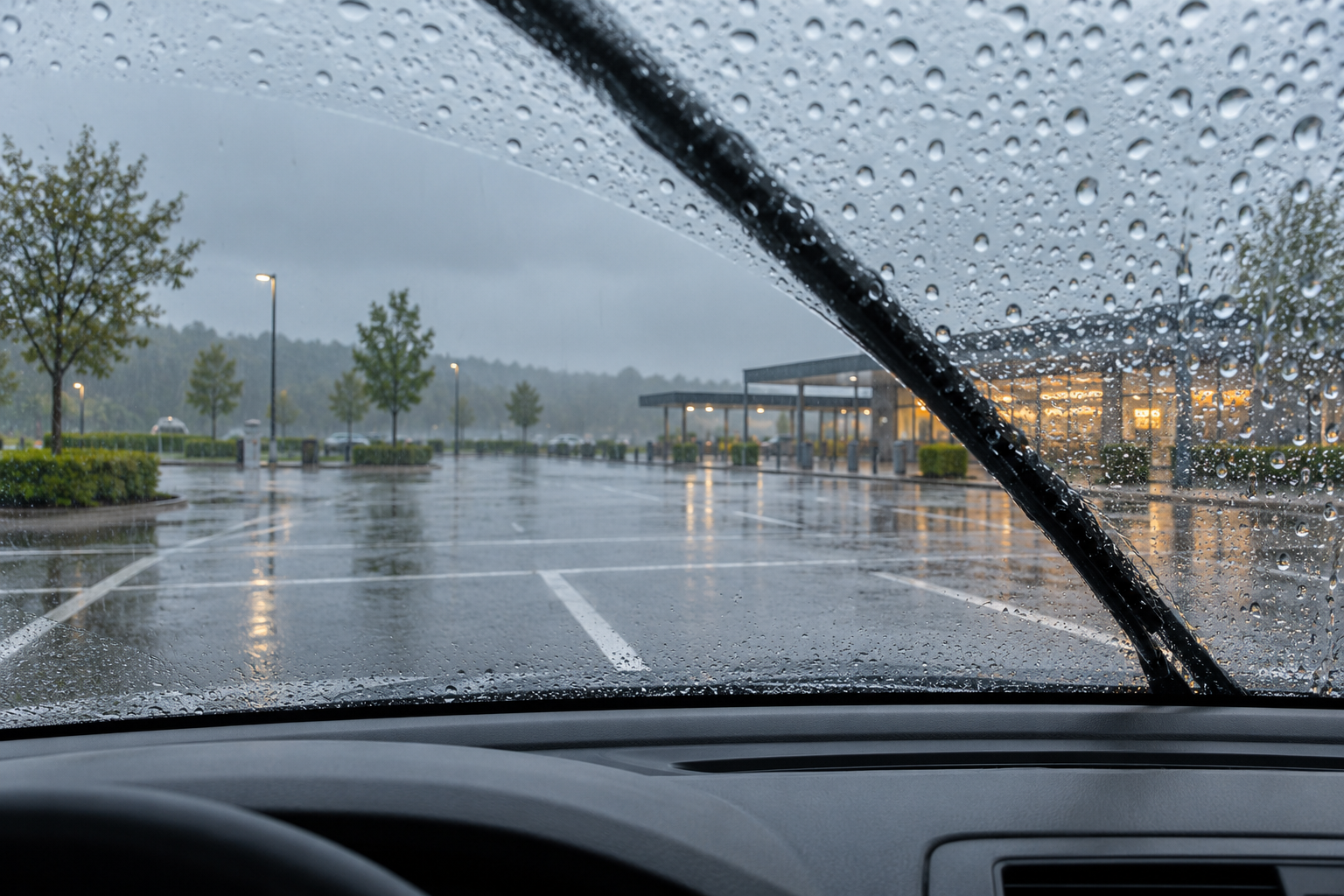
It is easier to decide that a trip can wait while you are still indoors than while you are following traffic through heavy spray. Before driving in heavy rain, make room in the plan for delay and identify places where you could leave the road safely.
This is not a formula that makes severe weather safe. Official warnings, closures, vehicle condition, and the route all matter. If authorities advise against travel or the journey is optional, postponing it may be the soundest decision.
Give the trip a realistic alternative
Check the official forecast, flood alerts, and road information for the route, not just the weather outside your home. A clear starting point says little about a low-lying stretch farther ahead. If a closure blocks the intended route, do not assume an unfamiliar minor road is a safe shortcut.
Tell anyone expecting you that arrival may change. That small conversation removes one avoidable source of pressure. For a necessary journey, consider whether a later departure or a different verified route would reduce exposure to the worst conditions.
While parked, identify ordinary designated places to pause, such as service areas or suitable car parks outside flood-prone locations. Check access from your direction of travel. A building visible across the road is not necessarily a place you can enter safely.
Prepare the controls before moving
Make sure you know how to operate the wipers, demisting, and lights without searching through unfamiliar menus on the road. Consult the vehicle manual while parked if necessary. Clear visibility should not depend on discovering a control during a downpour.
If the wipers leave a view you cannot see through, or a fault prevents you from keeping the glass clear, resolve it before setting off. Arrange navigation in advance and keep the phone out of use while driving. A passenger can handle messages and route information when one is available.
These preparations do not predict conditions; they reduce the number of other tasks competing for attention when conditions change.
Let visibility and space shape your driving
Rain and spray can obscure traffic, pedestrians, and the road ahead. Adjust speed to the conditions and allow more room from the vehicle in front. A posted speed limit does not establish an appropriate speed in every downpour.
The UK Highway Code says stopping distances on wet roads are at least twice those on dry roads and advises keeping farther back. That is UK guidance, rather than a guarantee that a particular gap will be enough in every situation. Follow the rules and official driving guidance where you are traveling.
If steering becomes unresponsive because water is interfering with tyre grip, the Highway Code advises easing off the accelerator and slowing gradually. Avoid abrupt attempts to force a correction. Do not use an empty-looking road as a place to experiment with the vehicle’s limits.
Make floodwater a reason to change the plan
The US National Weather Service warns against driving through flooded roads. Water can conceal a damaged road surface, and its appearance does not reliably reveal its depth or force. Another vehicle crossing successfully does not establish that yours can do the same.
Respect barriers and closures. Do not enter water to inspect the route or drive around a closure because the destination appears close. Seek a safe alternative or delay the journey. The point of a stopping plan is to make abandoning an unsafe route an expected option.
Also reconsider where you wait. A convenient low spot or parking area beside a stream can become dangerous as water rises. Use current local instructions when choosing a place to remain.
Leave the road before you become overwhelmed
If you can no longer maintain adequate visibility or judge the road ahead, reduce speed appropriately and seek a safe, lawful place off the traveling lanes as soon as you can reach one. Do not make a sudden stop or lane change to reach a missed exit.
A motorway shoulder is not an ordinary rest stop. If you are forced to stop because of an emergency or breakdown, follow the local emergency-road guidance and seek help as appropriate. Do not treat a traffic lane or an underpass as a convenient shelter.
Once safely parked, reassess the warnings and route before continuing. Send any update from there. An altered arrival time is a manageable outcome; pushing onward because you have already driven most of the way is not a useful test of whether the next stretch is safe.