
Booking “an STI test” can sound as though you are requesting one complete check. In practice, testing involves choices about which sexually transmitted infections to look for, which samples to collect, and when those samples can provide useful information. A short conversation helps make those choices clear.
You can need testing without having symptoms. You can also need an assessment for symptoms even if a previous test was negative. A clinician can help decide what is appropriate for your circumstances; this guide offers questions for that discussion, not a personal screening schedule.
Which infections are we checking for?
Ask the clinic to name the tests included in the appointment. A package, panel, or request to check “everything” should not be assumed to include every STI. If you are concerned about a particular infection or exposure, mention it directly and ask how it will be assessed.
Tell the clinician about symptoms, relevant past diagnoses, previous testing, and any known exposure. If you are pregnant or could be, say so. These details can affect the advice you receive. You do not need to know which laboratory test to order before asking for help.
Do the samples match the body sites involved?
Testing may involve urine, blood, or swabs. The right specimen depends on the infection and the site being checked. If you have had oral or anal sex, ask whether throat or rectal testing is appropriate. Do not assume a urine sample checks every possible site.
Describing the types of contact you have had gives the clinician more useful information than a label about your identity or relationship. If a question feels unclear, ask what information is needed and why. You can request a private conversation and explain if you need a slower pace or additional support.
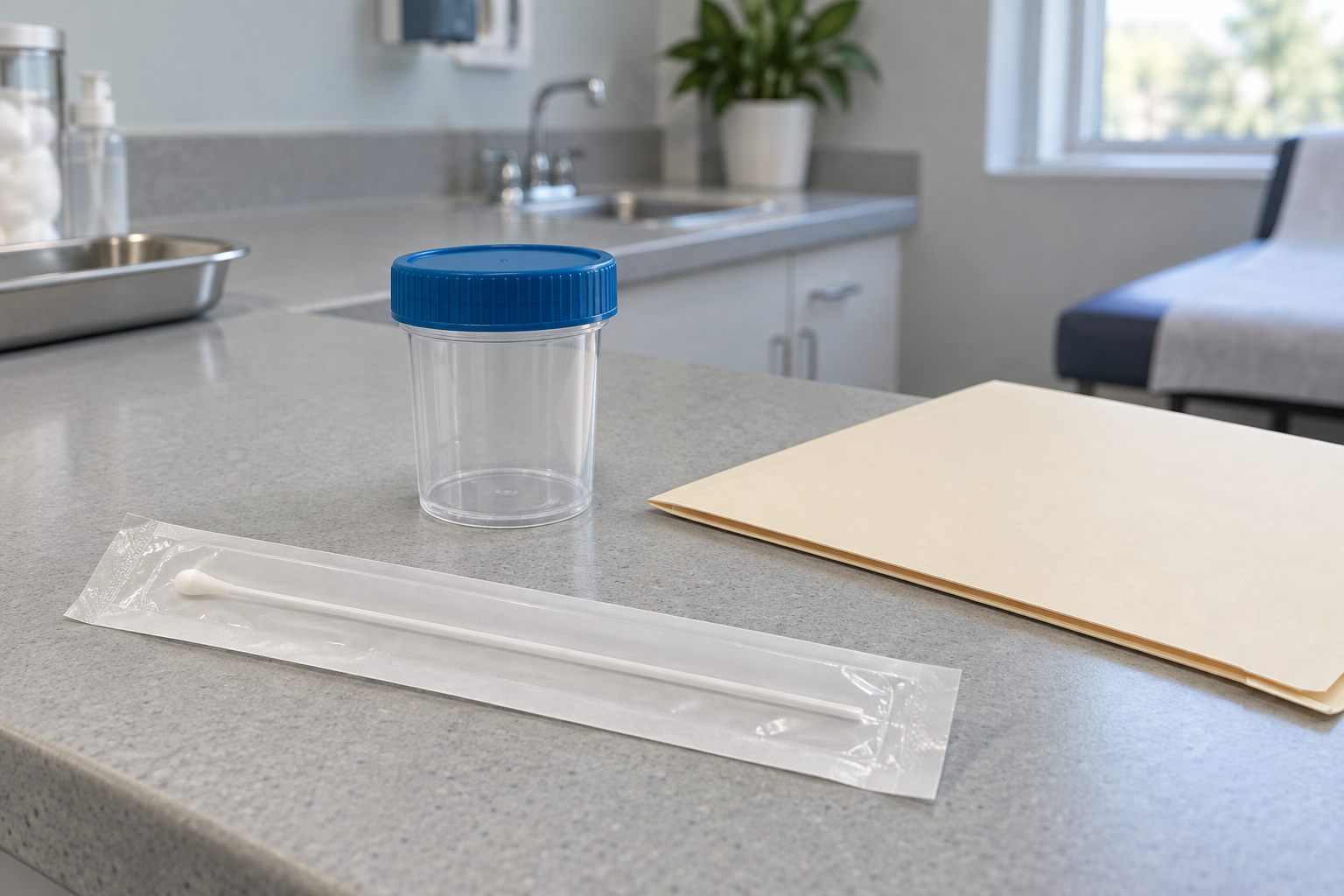
Before collection, ask for instructions for the specific sample. If self-collection is offered, have the clinic explain the steps and what to do if something goes wrong. Do not substitute supplies or change the method based on another test you used previously.
Is this the right time to test?
Tell the clinic when the possible exposure occurred, even if the date is approximate. The time before an infection can be detected is often called a window period, and it depends on the infection and test. Ask whether a result now would need to be followed by another test later.
For HIV, no test detects infection immediately after exposure. An early negative result can therefore require follow-up based on the type of test and clinical advice. Mention any HIV prevention medication you use so the clinician can plan testing appropriately.
Do not delay urgent care while waiting for a testing window. If you may have been exposed to HIV within the past 72 hours, contact a clinician, urgent care service, or emergency department immediately about post-exposure prophylaxis, called PEP. It must start within that time, and sooner is better. New or concerning symptoms also deserve prompt clinical advice.
How will I receive and understand the results?
Ask when results are expected, how you will be contacted, and whom to call if nothing arrives. If several tests are ordered, they may not all appear together. Confirm which results are still pending before assuming the process is complete.
When a result arrives, check the infection tested, the sample site, and the collection date. Ask what the result means in your circumstances and whether confirmation, treatment, or repeat testing is needed. A result concerns the person and sample tested; it does not establish a partner’s status.
Use terms such as positive and negative rather than “clean” or “dirty.” Testing is a health-care action, and a result is information to act on. It is not a judgment about a person’s character.
What should I ask about cost and privacy?
Before the visit, ask what the appointment and laboratory work may cost, whether follow-up is included, and what options exist if payment is difficult. Availability varies, so confirm arrangements with the clinic rather than assuming every service is free.
If confidentiality is a concern, ask how reminders, results, portal access, and insurance communications are handled. Explain which phone number or contact method is safe for you. Ask the clinic to clarify any limits to confidentiality that apply to your situation.
What happens after the appointment?
Leave with a clear plan for receiving results and any return visit. If an infection is identified, ask about treatment, partner notification, and when sexual contact can resume safely. Follow the clinician’s instructions instead of borrowing medication or assuming every infection requires the same treatment.
Finally, ask what prevention and future testing make sense for you. Write down the next action and a contact route for questions. You should be able to explain what was checked, what remains uncertain, and how that uncertainty will be addressed.