
Understanding the Connection Between AI, Data, and Automation
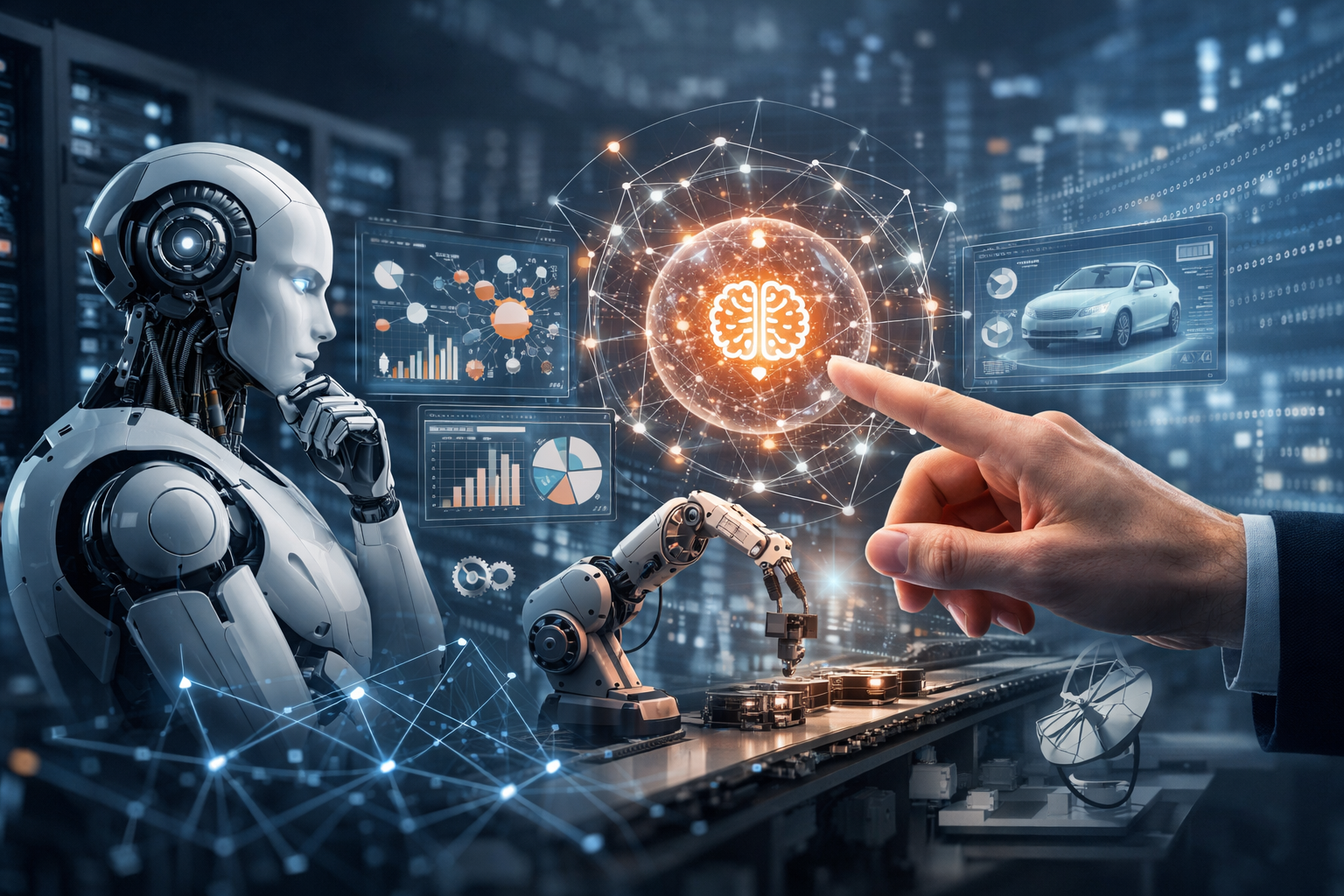
AI, data, and automation are often discussed as separate technologies, but in practice they work best as a connected system. Data provides the raw material, artificial intelligence turns that material into insight, and automation uses those insights to trigger or streamline actions. Together, they help organizations move faster, reduce manual effort, and make more consistent decisions.
Think of the relationship in simple terms: data tells you what is happening, AI helps explain what it means or what may happen next, and automation ensures the right response happens with minimal delay. This combination is becoming central in customer service, marketing, finance, healthcare, logistics, and many other industries.
What Data Really Does in Modern Systems
Data is the foundation of every intelligent workflow. Without useful, accurate, and well-organized data, neither AI nor automation can deliver reliable outcomes. Businesses collect data from websites, apps, sensors, transactions, support tickets, emails, and internal systems. But collecting data alone is not enough. It must be cleaned, structured, integrated, and governed.
High-quality data helps organizations answer critical questions: What are customers doing? Where are delays happening? Which products perform best? What risks are emerging? Once data is centralized and standardized, it becomes far easier to analyze patterns and identify opportunities for improvement.
Key characteristics of useful business data
-
Accuracy: Information should reflect reality and contain minimal errors.
-
Completeness: Important fields and records should not be missing.
-
Timeliness: Data should be up to date enough for the decisions being made.
-
Consistency: Definitions and formats should match across systems.
-
Accessibility: Authorized teams should be able to find and use it efficiently.
How AI Turns Data into Insight
Artificial intelligence uses data to recognize patterns, generate predictions, classify information, and support decision-making. In business settings, AI may forecast demand, detect fraud, summarize documents, recommend next actions, or personalize customer experiences. The more relevant and dependable the data, the more useful the AI output becomes.
AI is not magic, and it does not eliminate the need for human judgment. Instead, it extends human capability. For example, an AI system can scan thousands of customer interactions in minutes and highlight recurring complaints. A human manager can then decide how to improve the product or service. In this way, AI acts as a force multiplier.
Common types of AI used in operations
-
Predictive AI: Estimates likely future outcomes such as churn, sales, or equipment failure.
-
Generative AI: Creates text, images, summaries, code, or responses based on prompts and context.
-
Classification models: Sort items into categories, such as spam detection or ticket routing.
-
Recommendation engines: Suggest products, content, or actions based on behavior patterns.
Where Automation Fits In
Automation is the execution layer. Once a process is clearly defined, automation tools can perform repetitive tasks without constant human intervention. Traditional automation follows rules: if X happens, do Y. AI-enhanced automation goes further by adapting to patterns, making probabilistic decisions, and handling less structured inputs.
For example, a company may automate invoice processing. Basic automation can move files, extract fields, and update systems. With AI added, the workflow can read invoice formats from different vendors, flag anomalies, estimate approval risk, and route exceptions to the right person. The process becomes not just faster, but smarter.
Benefits of automation powered by AI and data
-
Reduced manual workload and fewer repetitive tasks
-
Faster response times across workflows
-
Improved consistency and fewer avoidable errors
-
Better scalability without matching increases in headcount
-
More time for teams to focus on strategic and creative work
Real-World Use Cases Across Industries
The value of AI, data, and automation becomes most visible in real workflows. In customer support, AI can analyze incoming messages, identify intent, and automate routing or response suggestions. In finance, data pipelines feed AI models that monitor transactions and trigger fraud alerts in real time. In healthcare, automation can help manage administrative workloads while AI supports diagnostics, triage, or patient communication. In supply chains, sensors generate data, AI forecasts demand or disruption, and automated systems reorder stock or adjust schedules.
Marketing is another strong example. Teams collect campaign and customer data, AI identifies segments or predicts conversion potential, and automation platforms send personalized messages at the right time. The result is often better engagement with less manual campaign management.
Challenges Organizations Should Not Ignore
Although the opportunities are significant, successful adoption requires discipline. Poor data quality can produce unreliable AI outputs. Over-automating weak processes can scale inefficiency instead of solving it. Privacy, security, bias, and compliance concerns must also be addressed early. If teams do not understand how systems make decisions, trust can decline quickly.
Another common mistake is implementing AI without a clear business problem. Technology should support a measurable outcome, such as lowering service costs, reducing turnaround time, improving forecasting accuracy, or increasing retention. Starting with a practical use case usually produces better results than launching a broad transformation effort all at once.
Important implementation priorities
-
Define the business problem before choosing tools
-
Invest in data quality and data governance
-
Keep humans involved in high-risk decisions
-
Measure performance with clear success metrics
-
Review outputs regularly for bias, drift, and compliance issues
The Future of Intelligent Workflows
As platforms improve, AI, data, and automation will become more deeply embedded in everyday operations. Instead of isolated tools, businesses will increasingly build connected workflows where information moves continuously, models update dynamically, and actions happen in near real time. This shift will not only improve efficiency but also change how teams collaborate, make decisions, and design customer experiences.
The most successful organizations will not simply automate for the sake of speed. They will build systems that are reliable, transparent, and aligned with business goals. In that environment, AI explainers matter because they help leaders and teams understand not just what the technology does, but how to use it responsibly and effectively. When data is trusted, AI is focused, and automation is well designed, the result is a more agile and intelligent organization.