
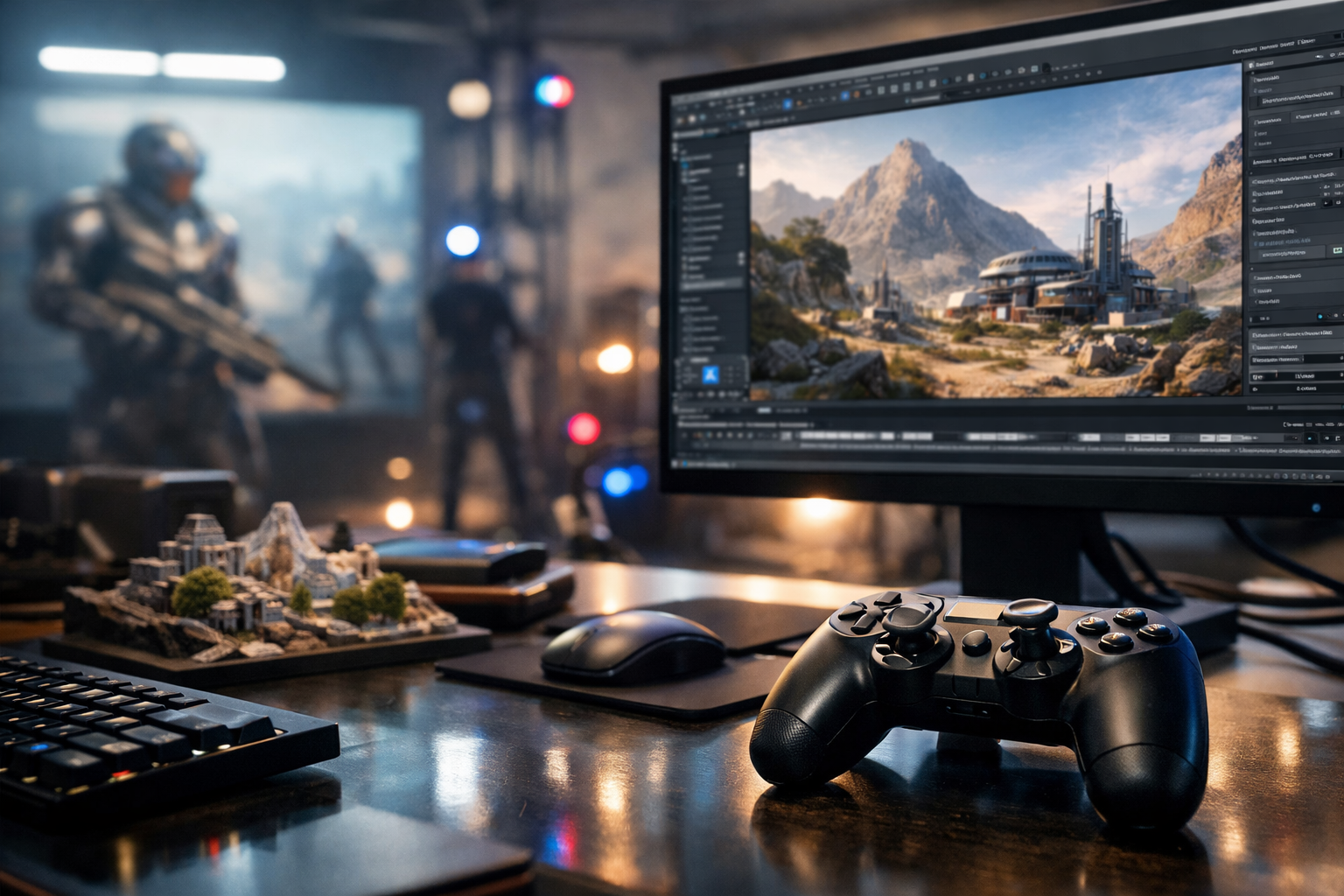
The Expanding World of Gaming and Game Development
Gaming has grown from a niche hobby into a global entertainment powerhouse, influencing culture, technology, education, and social interaction. Behind every polished title is a complex game development process that combines creative vision with technical precision. Whether the final product is a mobile puzzle game, a competitive multiplayer shooter, or a cinematic role-playing adventure, its success depends on the collaboration of many specialized disciplines.
Game development is no longer limited to large studios with massive budgets. Independent developers, small teams, and even solo creators now have access to powerful engines, digital distribution platforms, and online communities that make it possible to build and publish games on a global scale. This shift has expanded the variety of gaming experiences available and encouraged experimentation in gameplay, art direction, and storytelling.
What Game Development Really Involves
At its core, game development is the process of designing, building, testing, and launching interactive digital experiences. It typically begins with an idea, but turning that idea into a playable product requires structure, iteration, and problem-solving. Developers must consider player goals, game mechanics, user interface, performance, art assets, sound design, and monetization strategies long before release.
Most projects move through several major stages: pre-production, production, testing, launch, and post-launch support. In pre-production, teams define the concept, target platform, technical scope, and core gameplay loop. During production, artists, programmers, designers, writers, and audio specialists create the content and systems that bring the world to life. Testing identifies bugs, balance issues, and usability problems, while launch introduces the game to players. Today, post-launch updates are often just as important as the original release, especially for live-service and multiplayer titles.
Key Roles in a Development Team
- Game Designers create mechanics, progression systems, and player experiences.
- Programmers build gameplay systems, tools, artificial intelligence, networking, and performance features.
- Artists and Animators produce characters, environments, visual effects, and motion.
- Writers and Narrative Designers shape dialogue, lore, quests, and story structure.
- Sound Designers and Composers develop music, ambient audio, and satisfying feedback cues.
- Quality Assurance Testers identify bugs and help improve stability and usability.
- Producers coordinate timelines, resources, and communication across departments.
The Technology Powering Modern Games
Technology is one of the biggest drivers of innovation in gaming. Game engines such as Unity and Unreal Engine provide the foundational tools developers use to build worlds, simulate physics, render graphics, script interactions, and deploy games across multiple platforms. These engines have reduced technical barriers and accelerated development for studios of all sizes.
Advances in hardware have also raised player expectations. High-resolution displays, fast solid-state storage, ray tracing, advanced controllers, and cloud infrastructure enable more immersive and responsive experiences. Artificial intelligence now supports everything from smarter enemy behavior to procedural content generation and development workflows. Meanwhile, online services make cross-platform multiplayer, digital economies, and ongoing content delivery more common than ever.
Mobile gaming, virtual reality, augmented reality, and cloud gaming continue to broaden the industry. Each platform introduces unique design challenges. A mobile game must respect short play sessions and touch controls, while a VR game must prioritize comfort, spatial interaction, and performance. Successful developers understand that platform-specific design is not just a technical adjustment but a fundamental part of creating a strong player experience.
Why Gameplay Design Matters More Than Visuals Alone
Impressive graphics can attract attention, but gameplay is what keeps players engaged. Strong game development focuses on mechanics that are intuitive, rewarding, and meaningful. The best games teach players through interaction, gradually expanding complexity without creating frustration. They create a satisfying loop of action, feedback, challenge, and progression.
Balance is especially important. If a game is too easy, it becomes boring; if it is too difficult, many players quit. Designers constantly tune movement, combat, resource systems, level layouts, and progression rewards to maintain momentum. User experience also plays a major role. Menus, tutorials, checkpoints, accessibility settings, and performance optimization all influence whether players stay invested.
Core Design Priorities in Successful Games
- Clear goals and readable feedback
- Responsive controls and polished interactions
- Balanced challenge and progression
- Accessible onboarding for new players
- Memorable audio-visual identity
- Replayability or long-term engagement systems
The Rise of Indie Development and Creative Freedom
Independent game development has become one of the most exciting parts of the industry. Without the same commercial pressures as large publishers, indie creators often take creative risks that lead to fresh mechanics, emotional storytelling, and distinctive visual styles. Some of the most influential games of the past decade came from small teams willing to experiment with genre conventions or focus on highly specific player experiences.
Digital storefronts, crowdfunding, early access models, and creator-friendly engines have made it easier for indie projects to reach audiences. However, accessibility does not eliminate competition. The challenge for many indie developers is visibility. Marketing, community building, wishlist growth, and post-launch support are now essential business skills alongside creative and technical ability.
Challenges Facing the Game Development Industry
Despite its excitement and opportunity, game development remains demanding. Teams often work under tight deadlines, shifting technical requirements, and rising player expectations. Scope creep, budget overruns, platform certification issues, and crunch culture have all affected studios across the industry. Sustainable production practices are becoming a more important topic as companies seek healthier development cycles and improved retention of experienced talent.
Another major challenge is standing out in a crowded market. Thousands of games launch every year, making discovery difficult even for quality products. Developers must think beyond production and consider branding, audience targeting, platform strategy, influencer outreach, and ongoing player engagement. In modern gaming, building a good game is essential, but building a recognizable presence is often just as important.
The Future of Gaming and Development
The future of gaming will likely be shaped by deeper personalization, stronger community features, and more flexible ways to play. Developers are exploring procedural systems, adaptive difficulty, user-generated content, and AI-assisted production tools. As gaming continues to intersect with film, music, education, and virtual social spaces, the role of game development will only become more influential.
What makes the field so compelling is its blend of creativity and systems thinking. Game development is both an artistic craft and a technical discipline, requiring teams to build worlds that players do not just watch, but actively inhabit. As tools improve and audiences diversify, gaming will continue to expand in form, reach, and cultural significance.
For players, understanding game development adds a deeper appreciation of the work behind every level, mechanic, and story beat. For aspiring creators, it reveals an industry full of challenges, innovation, and opportunity. In every case, the evolution of gaming begins with the people who design, build, and refine the experiences that keep the world playing.